
Last updated September 23, 2026
Free visual inspection and a written scope of work before any mitigation begins - photos, moisture readings, and drying logs go in your claim file
The scope we write is the scope we bill. Anything new gets shown to you, in writing, before we touch it.
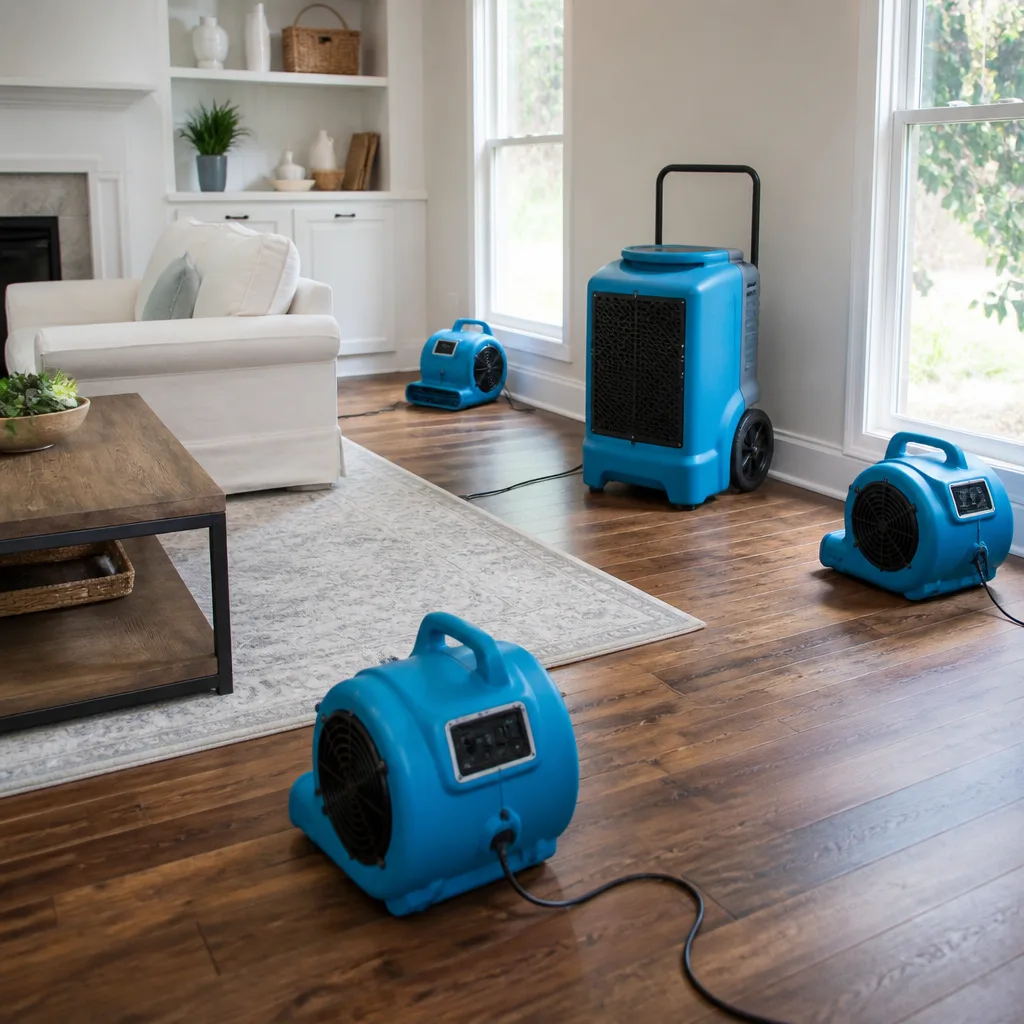
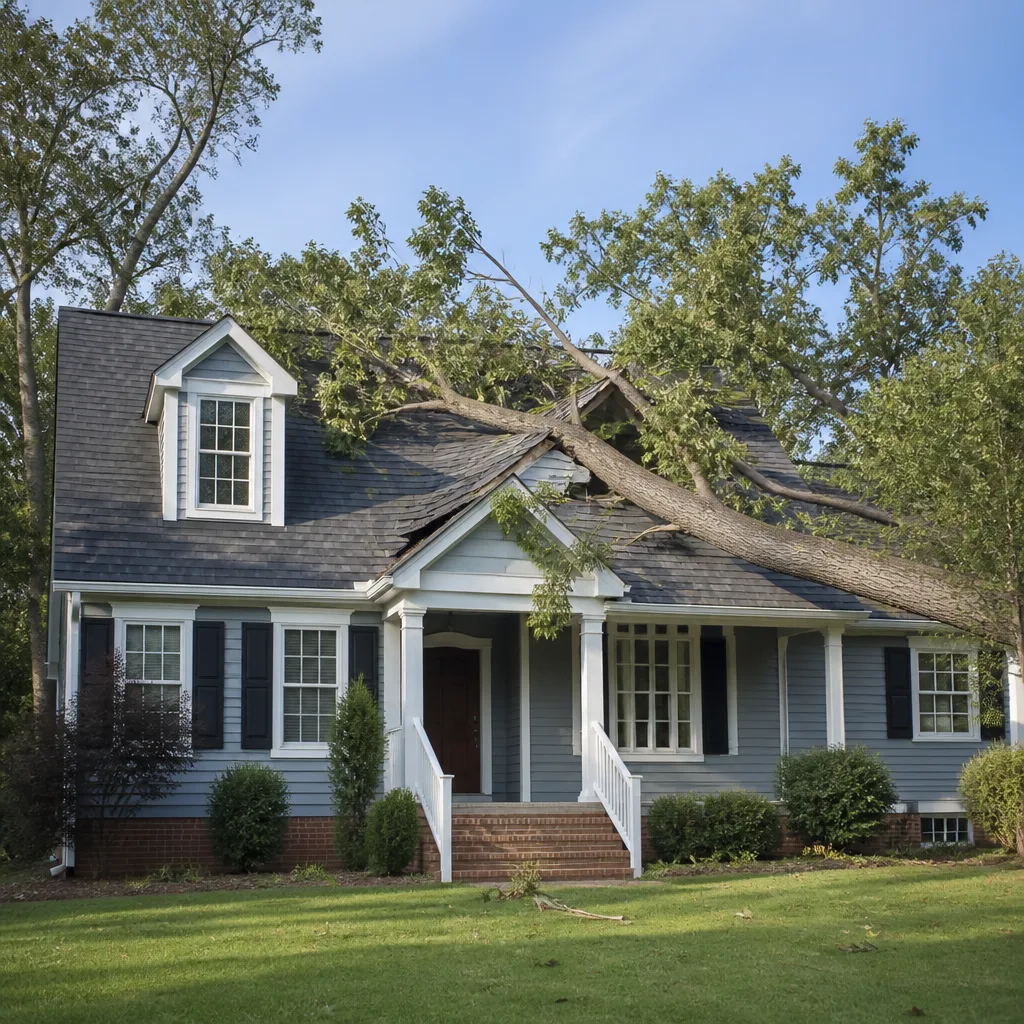
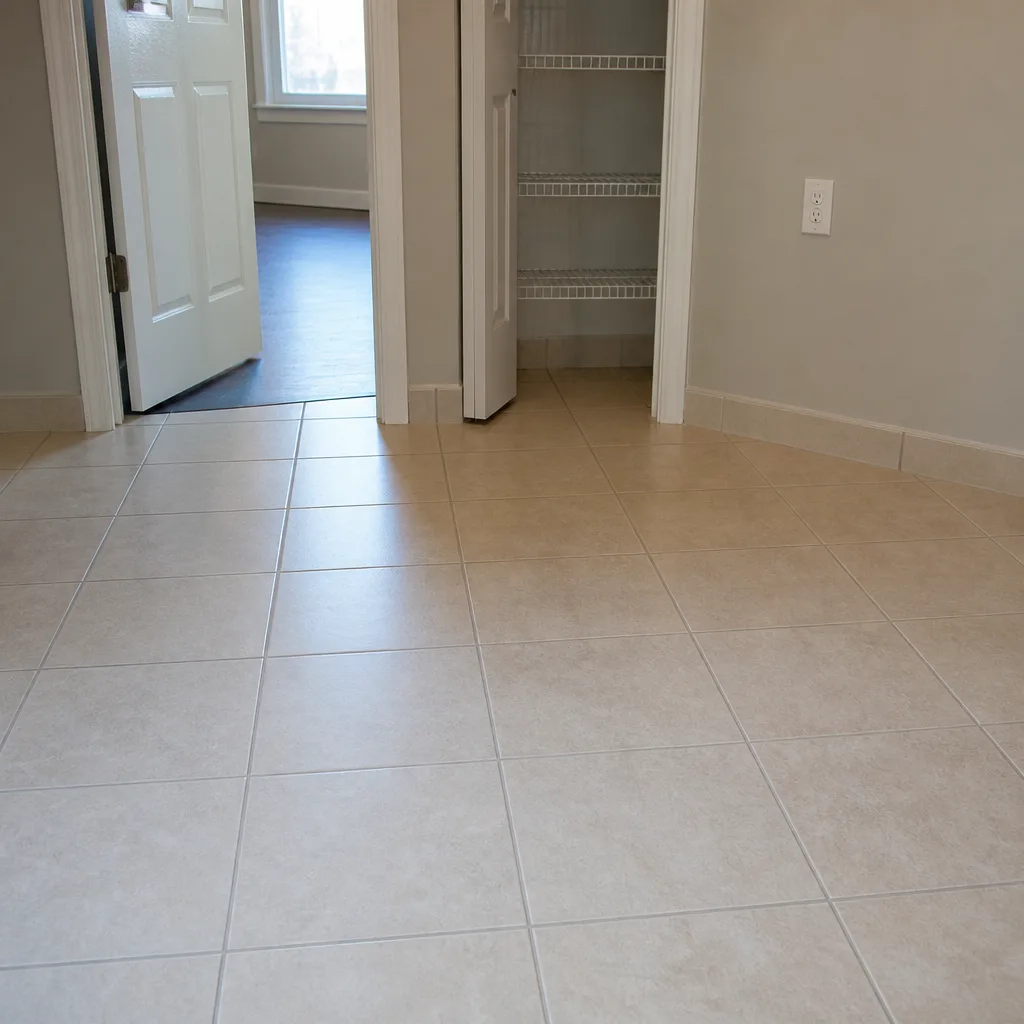
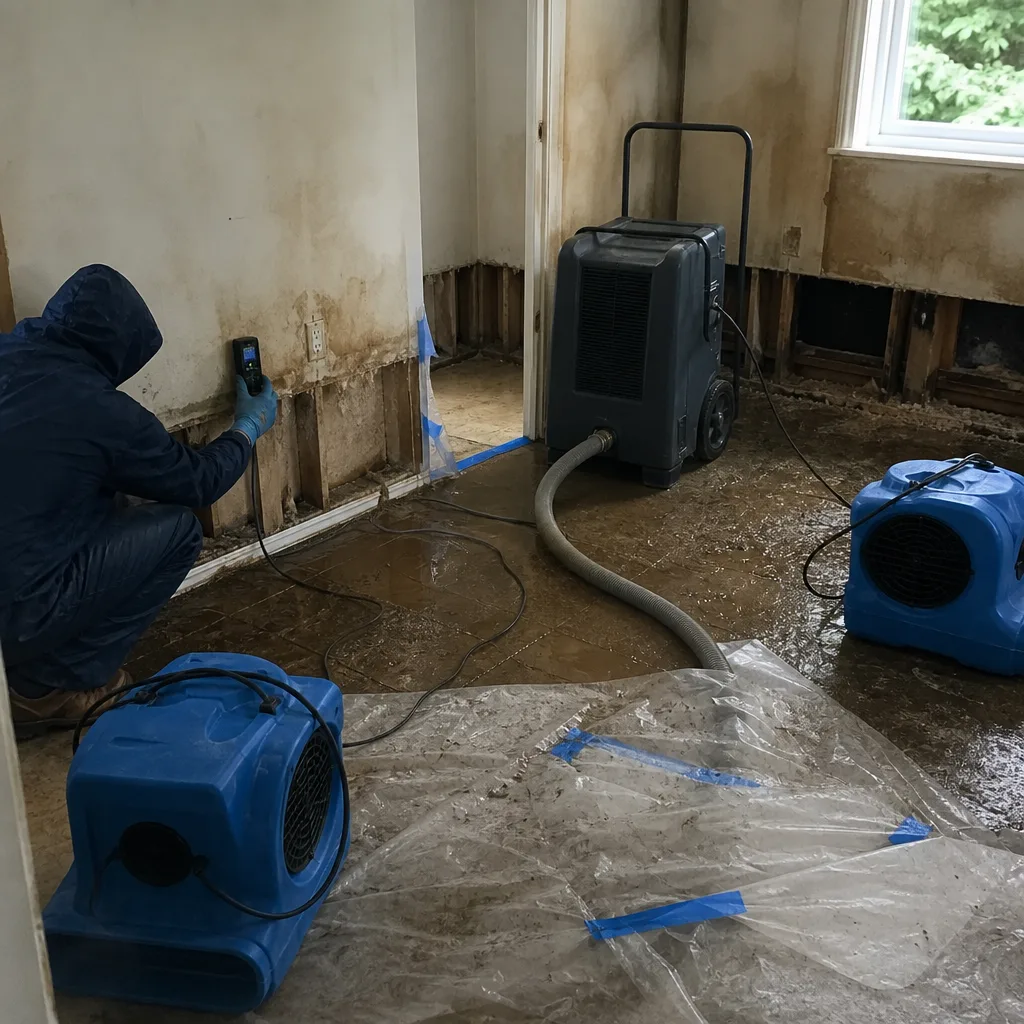 Before
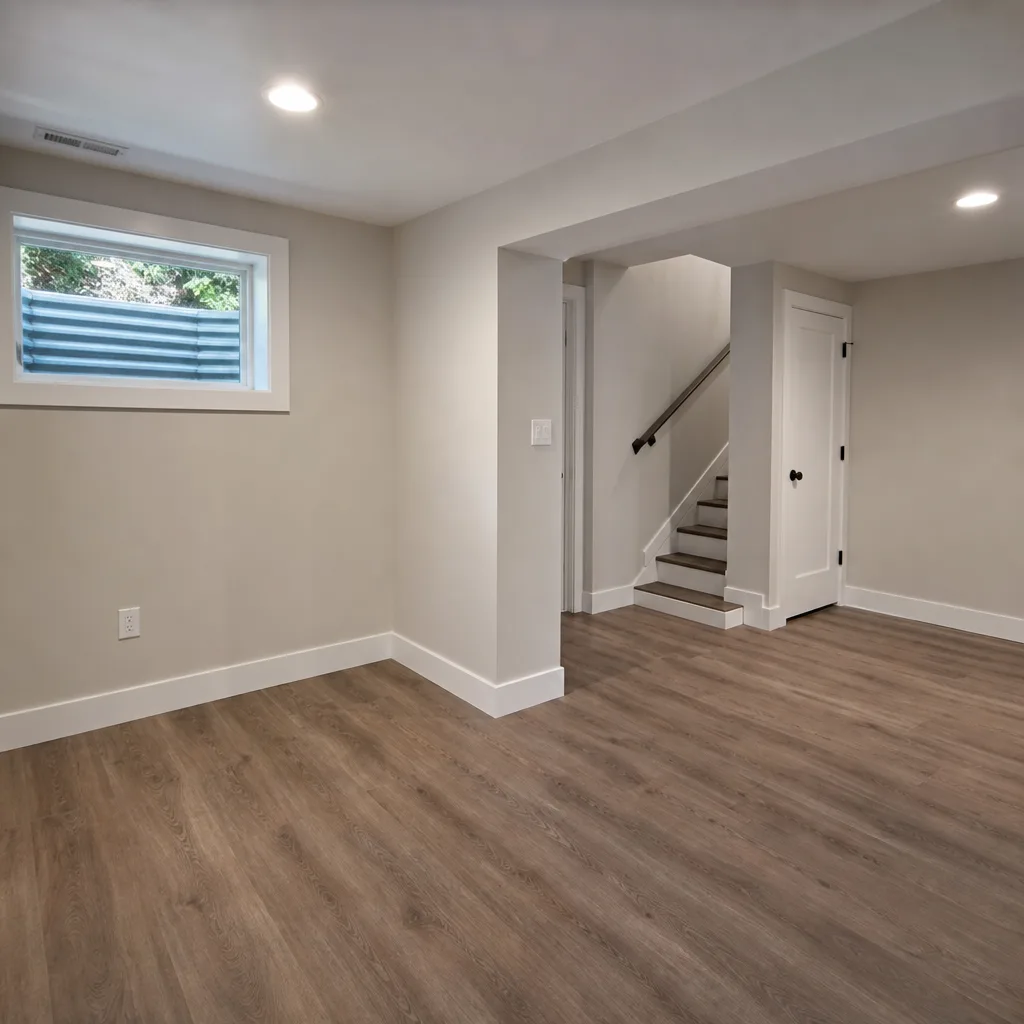 After
After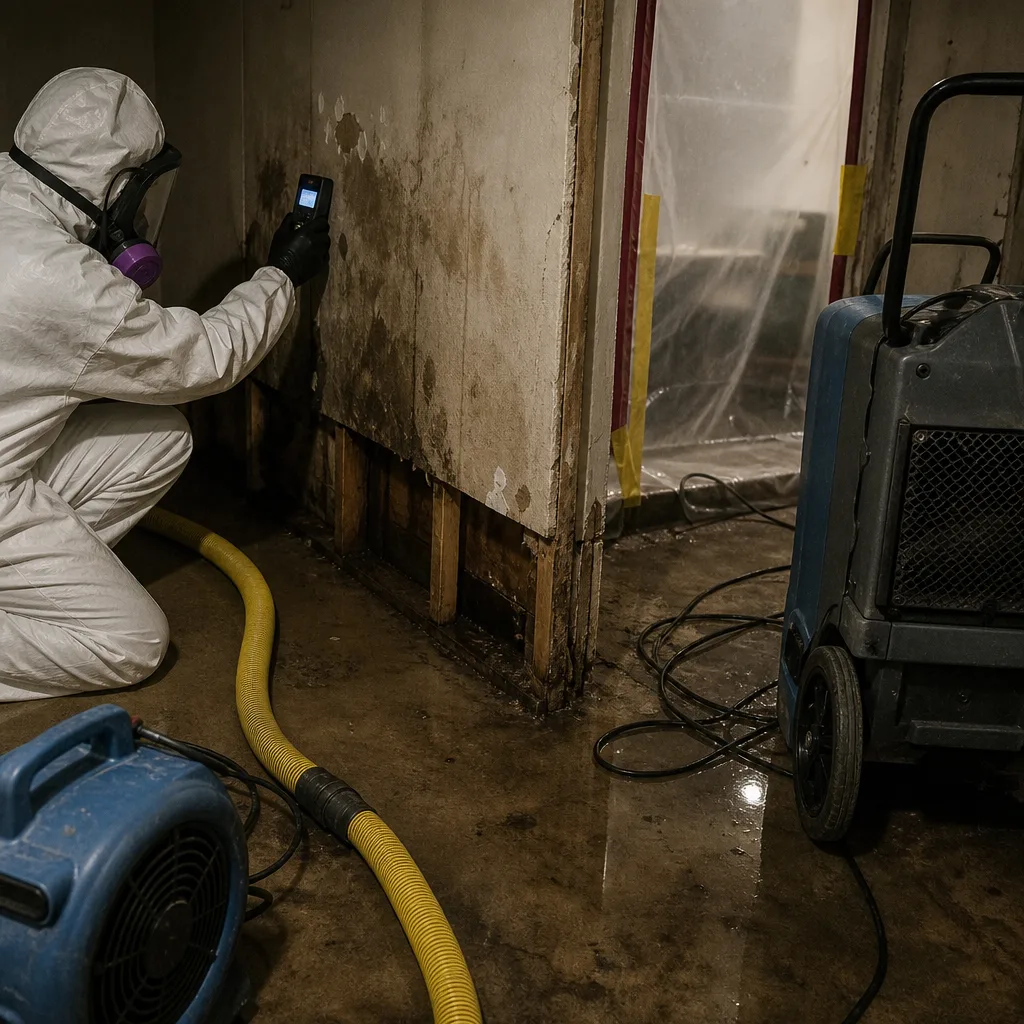 Before
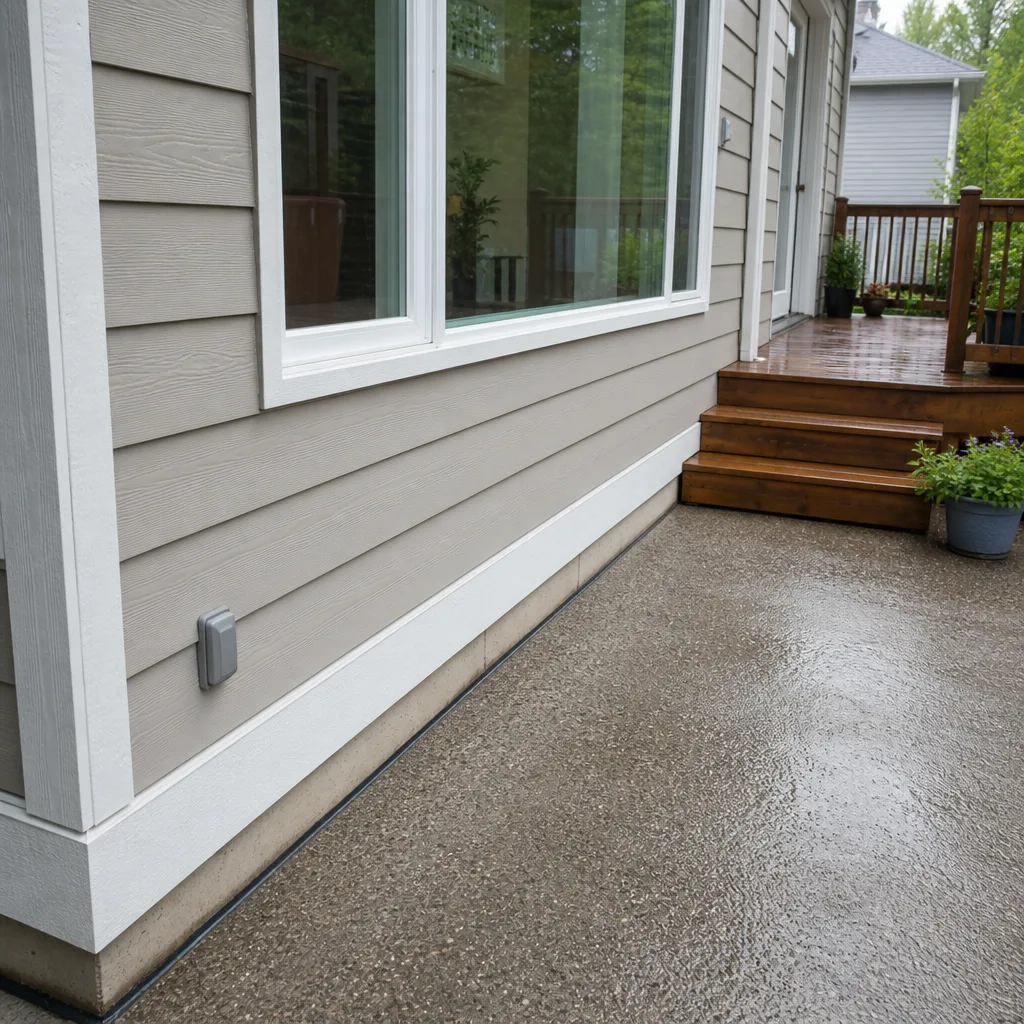 After
After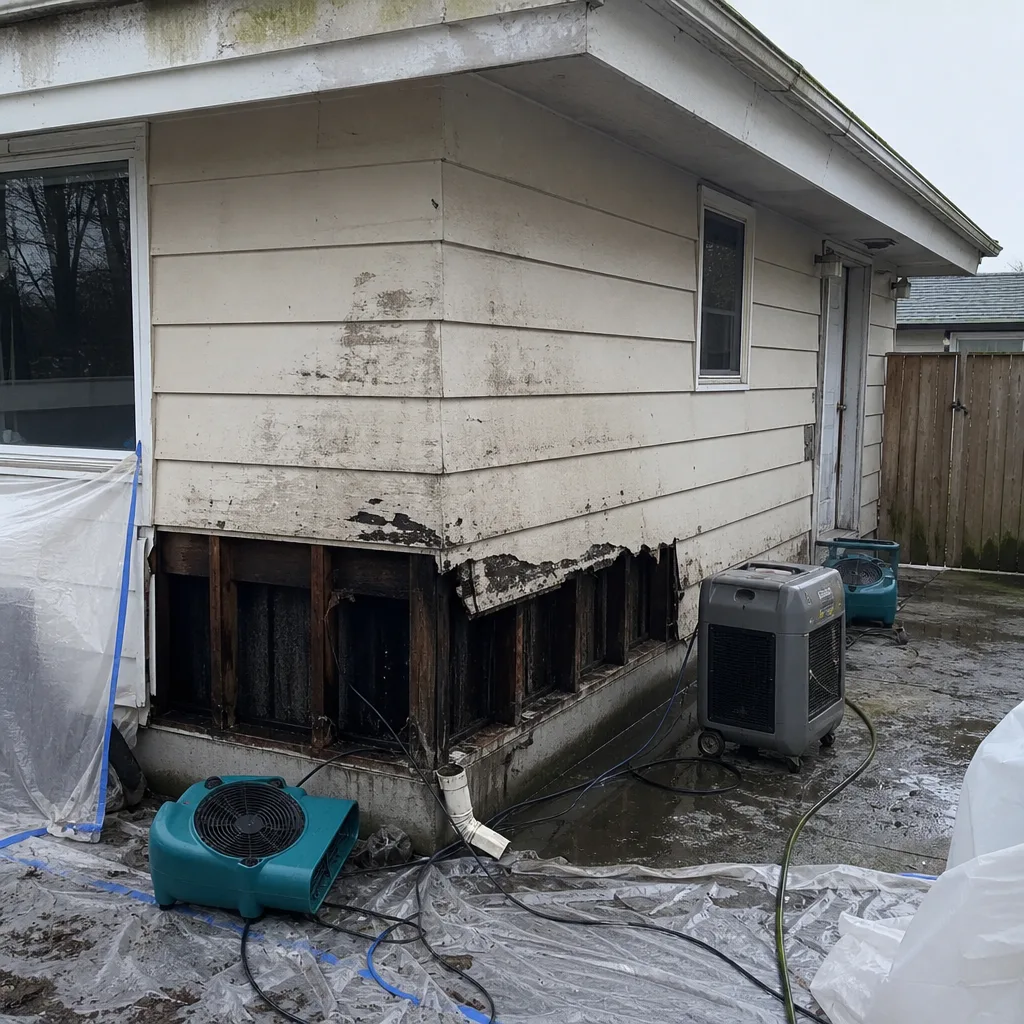 Before
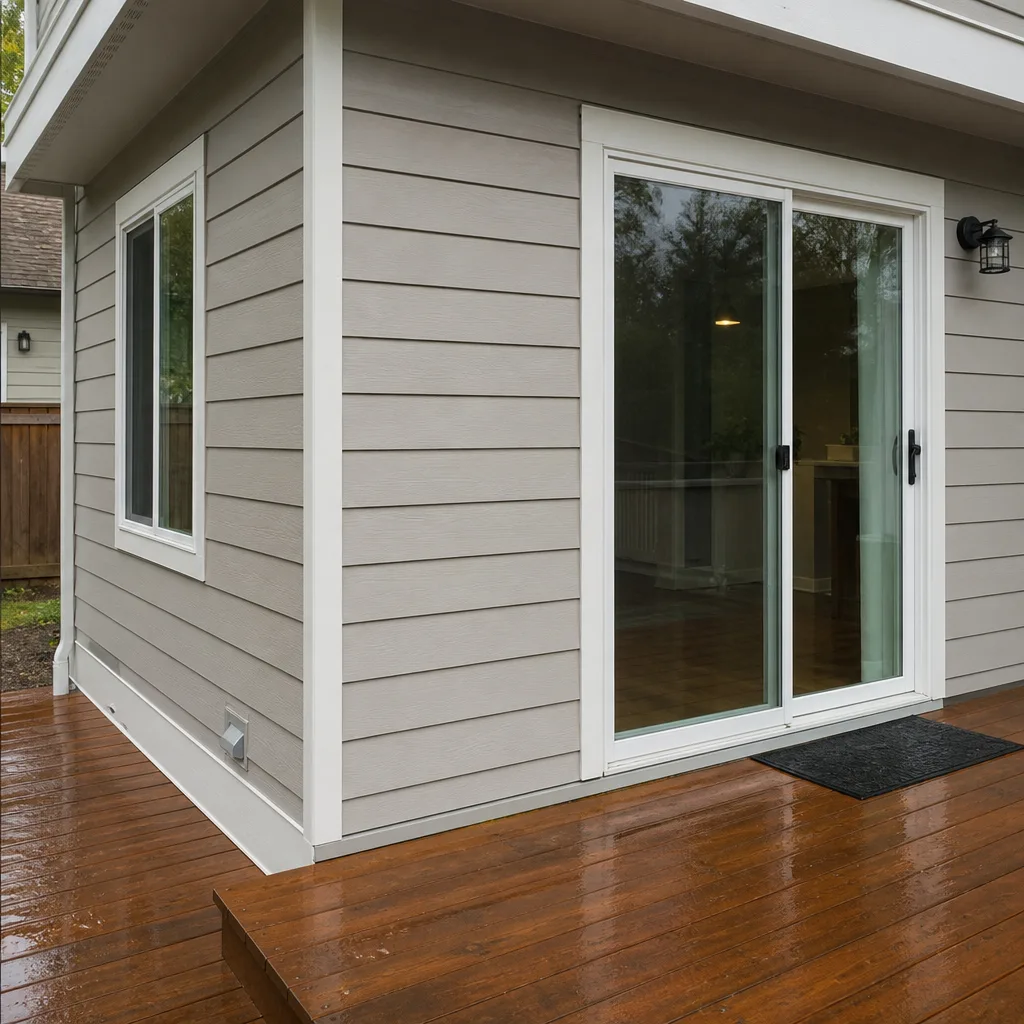 After
AfterHow to Hire a Damage Restoration Contractor in Redmond: A Step-by-Step Guide
Here’s a number that should stop every Redmond homeowner: roughly 30% of water damage claims are underpaid or denied not because the damage wasn’t real, but because the contractor’s documentation couldn’t survive adjuster review. We’ve reviewed hundreds of competitor files since 2011, and the pattern is consistent - impressive trucks, polished websites, and stacks of five-star reviews paired with drying logs that wouldn’t pass a basic quality audit. In this guide - and in our The Complete Guide to Damage Restoration in Redmond - you’ll learn how to vet a restoration contractor in Redmond based on the evidence they’ll produce, not the promises they’ll make. We’ll cover the five documents that must exist before work starts, how to read an estimate like an adjuster, and the specific red flags that surface after every major storm hits the Sammamish Valley.
Quick Answer
To hire a damage restoration contractor in Redmond, demand five documents before anyone starts work: a written estimate, a detailed scope of work, baseline moisture readings, an equipment placement plan, and a confirmed start date. Verify their Washington State contractor license number, review a redacted drying log from a completed job, and confirm they’ll coordinate directly with your insurance adjuster using photo-documented evidence. The contractor who can produce these items without hesitation is the one whose work will get your claim paid.
Table of Contents
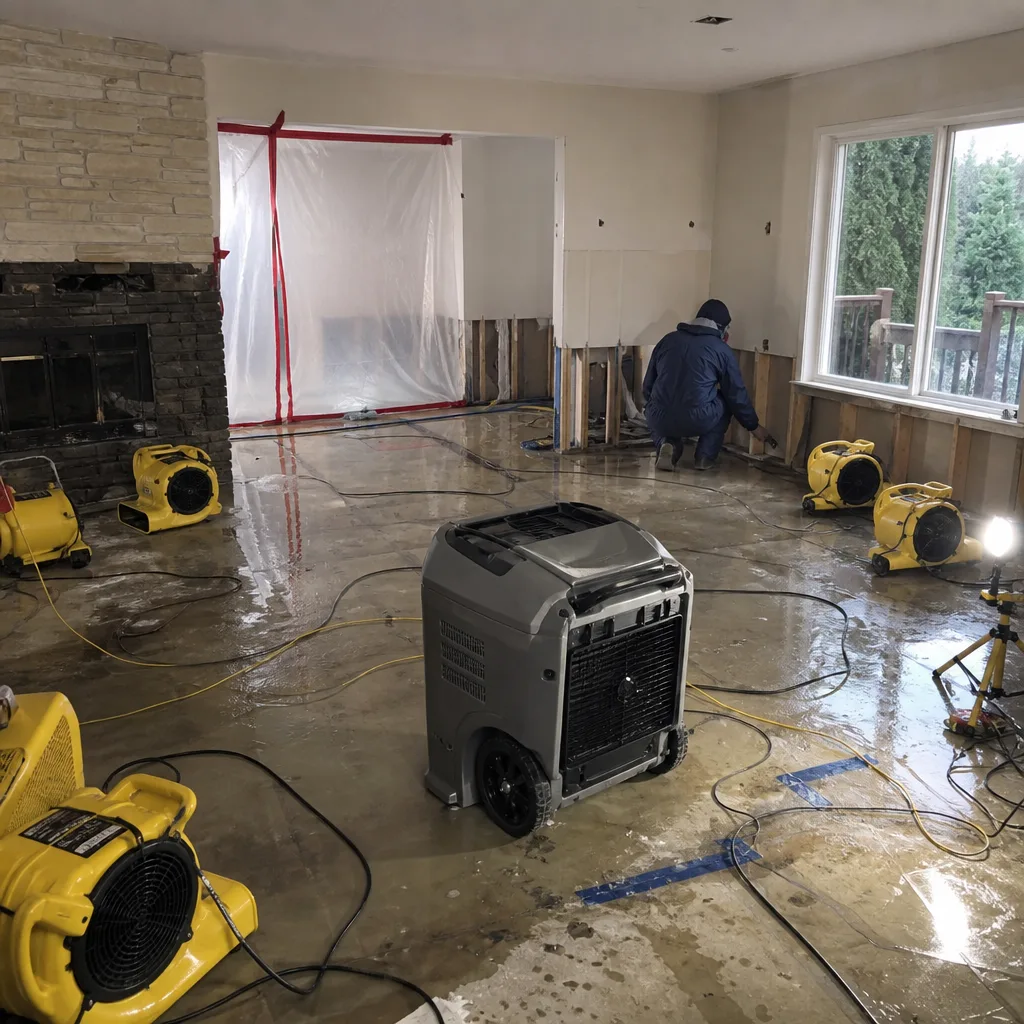
- Why Asking for References Is the Wrong First Question
- The Five Documents Every Redmond Contractor Should Produce Before Work Begins
- How to Read a Restoration Estimate Line by Line
- Red Flags Specific to Redmond’s Post-Storm Contractor Surge
- Structuring the Contractor-Adjuster Relationship from Day One
- What a Written Warranty Actually Changes About Accountability
- Common Mistakes to Avoid
- When to Call a Professional
- Frequently Asked Questions
- The Bottom Line
 Before
 After
AfterWhy Asking for References Is the Wrong First Question
The standard advice hasn’t changed in twenty years: check reviews, ask for references, verify certifications. All of that is reasonable. None of it predicts whether your contractor’s file will survive the scrutiny of a claims adjuster who has seen every documentation shortcut in the industry.
We’ve been on both sides of this. Alicia Brennan founded Back to Dry in 2011 after working as a claims adjuster and watching homeowners lose legitimate payouts because their contractor’s drying log was incomplete, moisture readings weren’t timestamped, or equipment deployment was never photographed. The homeowner had done everything “right” - they hired a company with hundreds of reviews, IICRC-certified technicians, and a fleet of branded vans. What they didn’t verify was whether that company produced evidence or just activity.
The right first question is simple: “Can you show me a redacted drying log from a completed job?”
What they hand you tells you everything. A legitimate log shows daily moisture readings by room, equipment serial numbers, psychrometric data (temperature, relative humidity, and vapor pressure differential - the measurable conditions that determine whether materials are actually drying), and technician signatures with timestamps. A blank stare, a promise to “get that from the office,” or a generic template with no job-specific data means you’re looking at a company that charges for motion, not results.
In Redmond specifically, this matters more than in many markets. Our climate patterns - wet winters with sustained humidity above 80%, followed by dry summer spikes - create complex drying conditions that require documented adjustments. A contractor who can’t show you how they tracked vapor pressure differentials through a February water loss in Education Hill isn’t equipped for this environment; see our Water Damage Restoration Maintenance Checklist for Redmond Homeowners for what ongoing tracking should look like.
The certifications matter. IICRC, RIA, and IFA standards exist for good reason. But standards without documentation are just wall decorations. Ask for the log first. Everything else follows.
The Five Documents Every Redmond Contractor Should Produce Before Work Begins
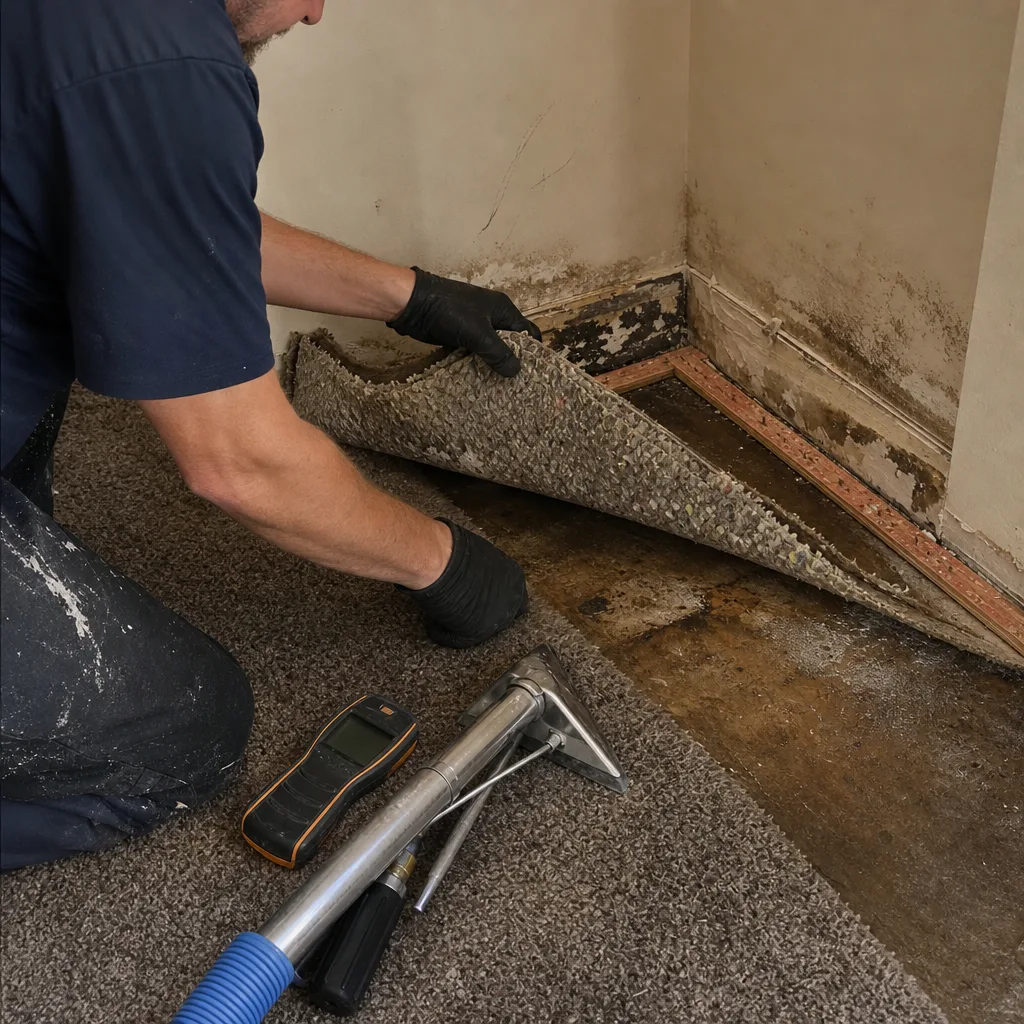
At Back to Dry, we operate under The Haven Standard, and Clause 1 is non-negotiable: a written price before any work starts, every time, with no exceptions. But a price alone isn’t enough. Here are the five documents that should exist before a technician touches your property, and what each one should contain.
1. Written Estimate
This is not a “quote” that changes once the crew arrives. It’s a fixed-scope document with line-item pricing, typically formatted in Xactimate (the industry-standard estimating software used by most insurance carriers). The estimate should specify:
- Each affected area by room name and approximate square footage
- Material classifications (Class 1 through 4 water damage, Category 1 through 3 contamination)
- Line-item costs for extraction, demolition, drying, cleaning, and reconstruction
- Equipment rental rates by day, with maximum rental periods specified
- Exclusions clearly noted (asbestos testing, permit fees, specialized subcontractor work)
In Redmond, expect water damage restoration to range from $3,200 for a limited Class 1 kitchen leak to $18,000+ for a Class 3 whole-house event with hardwood flooring. Mold remediation typically runs $2,800-$7,500 for contained attic or crawl space work, and $12,000-$25,000 for whole-house events following undetected long-term moisture. Fire and smoke damage starts around $8,500 for localized kitchen incidents and escalates based on structural involvement and content cleaning requirements.
2. Detailed Scope of Work
The scope explains what will be done, in what sequence, and by what standard. It should reference IICRC S500 (water damage), S520 (mold remediation), or S740 (fire and smoke) as applicable. For Redmond properties built during the 1980s-2000s construction boom, the scope should specifically address:
- Whether vinyl-backed drywall will be removed or dried in place (vinyl backing traps moisture and often requires removal)
- Crawl space vapor barrier condition and whether it will be addressed as part of drying
- Hardwood flooring species and whether restorative drying or replacement is planned
3. Baseline Moisture Readings
Before any equipment runs, the contractor should document moisture content in affected materials using calibrated pin or pinless meters, and in air using thermohygrometers. Readings should include:
- Wood moisture content percentage (baseline for dry wood in Redmond is typically 6-10%)
- Drywall moisture content (baseline 0.5-1.0% above ambient)
- Concrete or subfloor readings where applicable
- Adjacent “dry” reference areas to establish unaffected baselines
These readings prevent the common scam of “drying” materials that were never wet to begin with.
4. Equipment Placement Plan
This document shows where each piece of equipment will be placed, what type (air mover, dehumidifier, air scrubber, Injectidry panel system), and the calculated air changes per hour for each affected space. For Redmond’s tighter-built homes in neighborhoods like Bear Creek and Trilogy, the plan should account for restricted airflow patterns and whether supplemental dehumidification is needed to overcome the home’s natural air exchange rate.
5. Confirmed Start Date and Projected Timeline
For mitigation work (water extraction, initial drying, emergency board-up), this should be immediate - same day or next day. For reconstruction, it’s a scheduled start with a written timeline, not a vague “we’ll get to it.” The distinction matters: mitigation stops damage from spreading; reconstruction restores what was lost. Promising same-day reconstruction is a red flag - that work requires permitting, material ordering, and structured scheduling.
At DryMark Restoration Redmond, these five documents are produced on every job before work begins, under Haven Standard, Clause 1. No exceptions in 12,000+ homes since 2011.
How to Read a Restoration Estimate Line by Line
Insurance adjusters read estimates differently than homeowners. They look for documentation that supports each line item, and they challenge anything that seems inflated, duplicated, or unsupported. Learning to read an estimate their way protects you from both overbilling and underpayment.
Understanding Xactimate Line Items
Most legitimate restoration estimates in Redmond use Xactimate, the pricing database maintained by Verisk. Each line item contains:
- Item code: A unique identifier (e.g., WTR DEH for dehumidifier, WTR AIR for air mover)
- Description: The specific equipment or activity
- Quantity: Number of units or hours
- Unit price: The Redmond-area market rate, adjusted for local labor and material costs
- Extended price: Quantity multiplied by unit price
- Overhead and profit: Typically 10% overhead plus 10% profit on jobs involving three or more trades, applied per insurance policy terms
What to Verify on Each Page
Equipment charges: Dehumidifiers should be priced by type (LGR - low grain refrigerant - versus standard refrigerant) and by day, with a maximum rental period noted. Air movers should be counted by affected room, not by arbitrary total. In our experience, a 12×14 bedroom with a Class 2 water loss needs 3-4 air movers, not 8.
Labor rates: Technician, supervisor, and estimator rates should be itemized separately. “Restoration labor” as a blended rate without breakdown is a common hiding place for markup.
Material costs: Drywall, insulation, flooring, and paint should specify grade and manufacturer where relevant. “Paint, interior” without sheen, brand, or coverage specification invites substitution with lower-grade material during reconstruction.
Contents manipulation: Moving furniture and belongings to access wet areas is legitimate, but it should be itemized by room and by hour, not as a percentage of total job cost.
Dumpster and disposal: Verify whether this is a flat rate or by weight, and whether hazardous materials ( Category 3 water damage, lead paint, asbestos-containing materials) are priced separately with proper disposal documentation.
Redmond-Specific Pricing Context
The King County labor market affects every line item. Xactimate’s Redmond pricing reflects higher electrician and plumber rates than national averages, particularly for emergency after-hours calls. If your estimate uses national default pricing rather than localized rates, your contractor may be planning to supplement later - a practice that delays claim resolution and often leaves homeowners covering gaps.
We provide a Free Second Opinion on any competitor’s written estimate. Bring your Xactimate summary and we’ll review it against local pricing, flag unsupported line items, and identify missing scope - at no charge. Haven Standard, Clause 1 applies to our own estimates, and our review of others.
Red Flags Specific to Redmond’s Post-Storm Contractor Surge
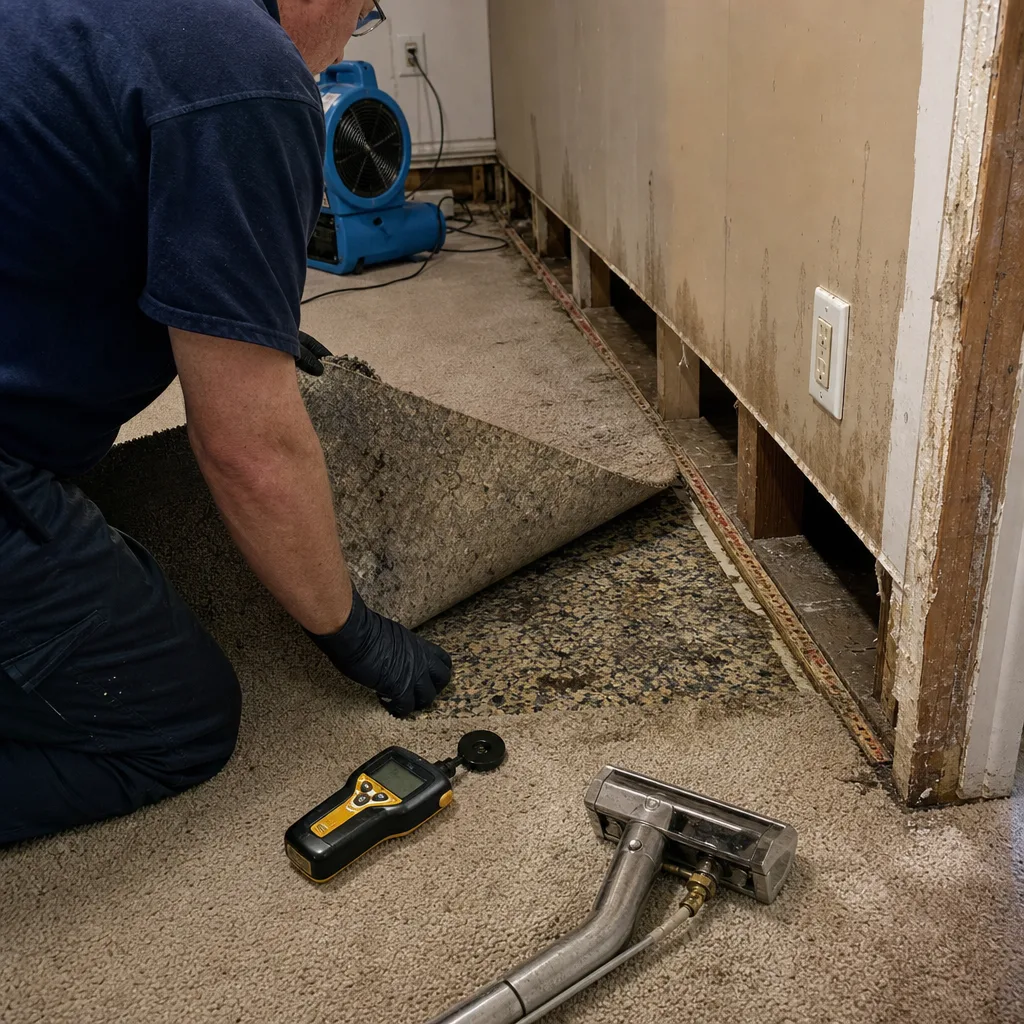
Redmond’s location in the Sammamish Valley makes it vulnerable to specific storm patterns: November atmospheric rivers that overwhelm drainage systems, January freeze-thaw cycles that burst pipes in hillside homes, and summer thunderstorm microbursts that damage roofing in neighborhoods like English Hill and Redmond Ridge. After each event, a predictable contractor surge follows.
Here are the specific red flags we’ve documented in our 12,000+ jobs since 2011:
The Unsolicited Arrival
A contractor who knocks door-to-door after a storm, claims to be “working in the neighborhood,” and offers immediate service is not conducting legitimate business development. They’re exploiting urgency. Legitimate restoration companies in Redmond do not canvas neighborhoods. We respond to calls, not weather events.
The Immediate Signature Demand
Any contractor who presents an “authorization to proceed” or “direction to pay” document before you’ve reviewed their estimate with your insurer is attempting to control the claim process. In Washington State, this practice can create assignment of benefits issues that complicate your coverage. Take the document, tell them you’ll review it, and close the door.
The License Number Evasion
Washington State requires all construction contractors to carry a registration number issued by the Department of Labor & Industries. Ask for it verbally, then verify it at https://secure.lni.wa.gov/verify/. A contractor who cannot recite their number, who provides a “business license” (different from contractor registration), or who asks you to “look it up later” is unregistered or operating under another entity’s number. This is immediate disqualification.
The Equipment-Only Approach
Some storm-chasing operations drop dehumidifiers and air movers, collect daily rental fees, and never return to monitor progress. Proper drying requires daily or every-other-day moisture readings, equipment adjustment, and documentation. Ask specifically: “Who will check readings, and how often?” The answer should name a technician and a frequency, not “someone from the office.”
The Out-of-State Plate, Local Phone Number
Post-storm surges bring contractors from California, Texas, and Florida who rent local numbers and temporary office space. Check how long they’ve operated in King County. Ask for a Redmond-area reference from a job completed more than six months prior. Their inability to produce one is informative.
The “Insurance Specialist” Who Isn’t
Any contractor who promises to “handle everything with your insurance” without specifying documentation protocols, adjuster meeting attendance, and written scope approval is making a sales pitch, not a service commitment. Insurance coordination requires evidence: photos, moisture logs, material invoices, and labor documentation. Ask how they produce each item and when you’ll receive copies.
At Water Damage Restoration in Redmond, our response to storm events follows documented protocols: written estimate before work, photo record on every visit, daily drying logs, and direct adjuster coordination with your involvement at every step.
Structuring the Contractor-Adjuster Relationship from Day One
The most expensive misunderstanding in restoration is the belief that your contractor and your adjuster are adversaries. They’re not. They’re two professionals who need the same evidence to reach different conclusions: the contractor to justify scope and pricing, the adjuster to confirm coverage and limit exposure. When evidence is shared transparently, both jobs get easier. When it’s withheld, disputed, or poorly documented, the homeowner pays in delays, denials, and out-of-pocket costs.
Step 1: Notify Your Carrier Before Work Starts
Washington State insurance policies typically require prompt notification of loss. Call your carrier’s claims line before or simultaneously with contacting a contractor. Document the claim number, adjuster name, and expected contact timeline. Provide this information to your contractor; it allows them to prepare documentation in the format your carrier prefers.
Step 2: Request a Joint Site Visit
The most efficient restoration claims involve a joint inspection with you, your contractor, and your adjuster present. This prevents the common scenario where the adjuster scopes the job at $8,500 and the contractor later bills $14,000 because “they didn’t see the crawl space.” Schedule this visit within 24-48 hours of loss when possible.
Step 3: Establish Documentation Sharing Protocols
Ask your contractor:
- Will I receive copies of all photos, or only a selection?
- Will drying logs be shared with my adjuster automatically, or only upon request?
- Who is my point of contact for questions about documentation?
- How quickly can you produce supplemental documentation if my adjuster requests it?
At Back to Dry, our standard deliverable includes a complete photo record on every visit, shared with both homeowner and adjuster. This isn’t an upsell; it’s included because incomplete documentation is the single largest cause of claim underpayment.
Step 4: Separate Mitigation from Reconstruction Decisions
Mitigation is emergency work to prevent further damage; it’s typically covered without extensive dispute. Reconstruction involves choices: replace with like kind and quality, or upgrade? Use original materials, or substitute? These decisions affect your out-of-pocket costs and should never be made under pressure during the emergency phase. Your contractor should document mitigation completion, obtain adjuster approval of the scope, and only then proceed to reconstruction planning with a separate written estimate.
Step 5: Maintain Your Own File
Even with excellent contractor documentation, maintain your own file: photos you take, emails with your adjuster, notes from phone calls with dates and representative names. If documentation discrepancies arise, your independent record resolves them quickly.
In Redmond’s competitive housing market, where median home values exceed $1.2 million in many neighborhoods, reconstruction scope disputes can involve significant sums. The contractor who documents thoroughly protects your investment; the one who doesn’t leaves you negotiating from weakness.
What a Written Warranty Actually Changes About Accountability
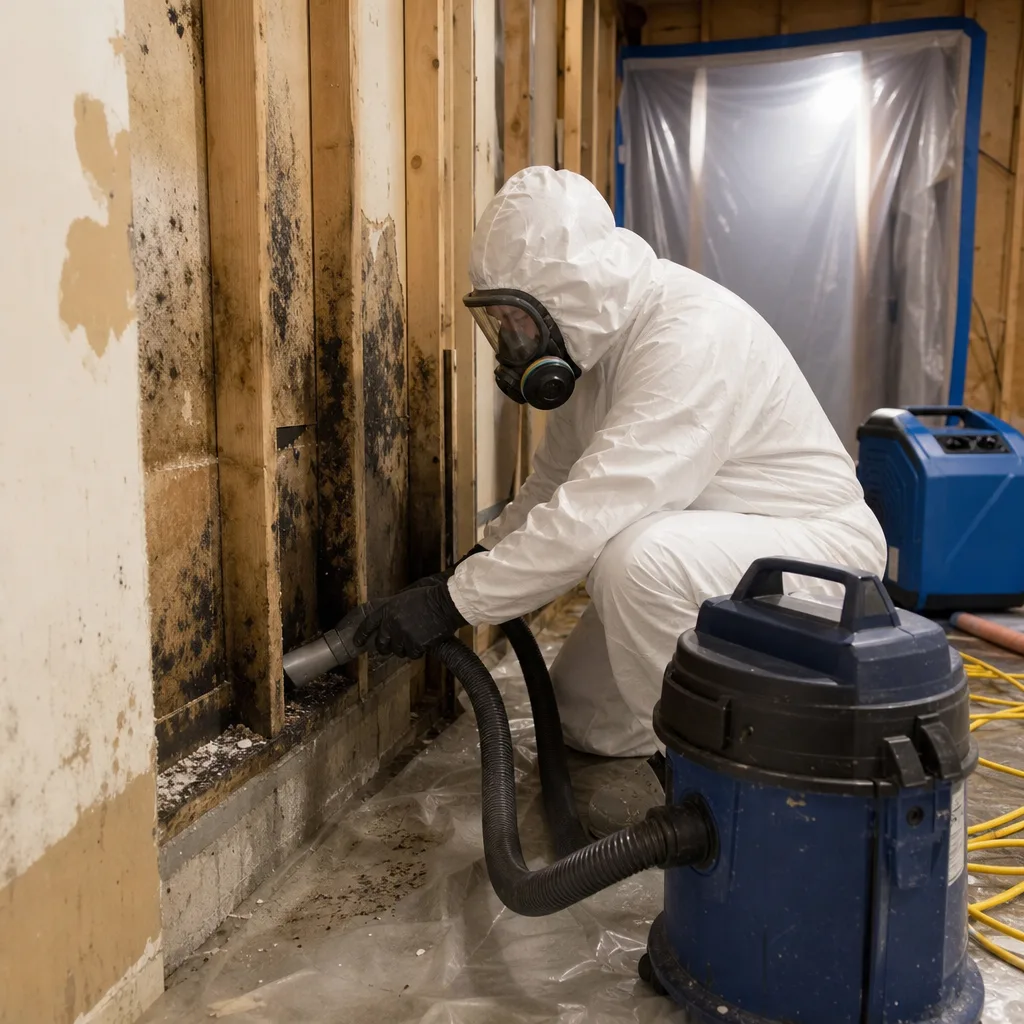
Most restoration contractors offer “satisfaction guaranteed” or “done right promise” language. For more guides & resources on evaluating these commitments, see our blog. Few put it in writing with specific terms, conditions, and duration. The difference between a verbal assurance and a written warranty is the difference between a marketing statement and an enforceable contract.
The Haven Standard: 365-Day Done Right Promise
At Back to Dry, every job carries the 365-Day Done Right Promise, backed by The Haven Standard. This is not a verbal commitment; it’s a signed guarantee with specific terms. If work fails to meet the documented scope within 365 days of completion, we return to make it right at no additional cost. The warranty covers:
- Moisture recurrence in dried areas (documented by new baseline readings)
- Mold regrowth in remediated spaces (verified by third-party post-remediation verification)
- Structural reconstruction defects (settling, cracking, finish failures)
- Equipment or material failures traceable to original installation
Why 365 Days Matters
Many contractor warranties are 30, 60, or 90 days - long enough to prevent immediate callback, short enough to expire before seasonal cycles test the work. In Redmond, our wet winters and dry summers create expansion-contraction cycles that reveal incomplete drying or rushed reconstruction between months 6 and 12. A 365-day warranty forces the contractor to account for this cycle in their original work.
What to Demand in Any Warranty
Whether you hire Back to Dry or another contractor, your warranty should specify:
- Duration in calendar days, not “one year” with ambiguous start date
- Scope of coverage - what specific failures are included and excluded
- Response time commitment - how quickly the contractor will inspect reported issues
- Remedy description - repair, replacement, or refund, and under what conditions
- Transferability - whether the warranty transfers to subsequent homeowners
- Documentation requirements - what you must maintain to preserve coverage
A contractor who won’t put these terms in writing is telling you something about their confidence in their own work. Listen.
Our 12,000+ completed jobs since 2011 include the documentation that makes warranty claims rare and resolution straightforward when they occur. Every job has a written price before work starts, a photo record on every visit, and a signed 365-Day Done Right Promise. This structure exists precisely because we’ve seen what happens when it doesn’t.
Common Mistakes to Avoid
- Waiting for the adjuster before calling a contractor. In Redmond’s climate, water damage progresses rapidly; mold can establish within 48-72 hours. Mitigate first, document thoroughly, and let the evidence support your claim rather than letting damage escalate while you wait for insurance approval.
- Accepting a “verbal estimate” for emergency work. Every legitimate contractor can produce a written estimate, even for after-hours calls. Verbal estimates become “misunderstandings” when the bill arrives. Haven Standard, Clause 1 exists to end this practice.
- Hiring based on response speed alone. The contractor who arrives fastest after a storm is often the least prepared to document properly. Speed matters for mitigation, but not at the expense of the five required documents.
- Ignoring crawl space and attic scope. Redmond’s hillside homes in neighborhoods like Ames Lake and Novelty Hill frequently have water migration into unfinished spaces that isn’t visible from living areas. A scope that doesn’t include these areas is incomplete.
- Signing a direction-to-pay without legal review. These documents assign your insurance benefits to the contractor, removing your control over the claim. They’re sometimes necessary for large losses, but should never be signed under pressure or without understanding the terms.
- Failing to verify post-remediation moisture levels. Whether mold remediation or water damage drying, demand third-party verification or at minimum, contractor-provided readings with clear documentation that materials have returned to baseline. “Looks dry” is not a measurement.
- Assuming reconstruction is covered at replacement cost. Many policies in Washington State cover actual cash value for reconstruction unless you’ve purchased replacement cost coverage. Your contractor should help you understand this distinction before work begins, not surprise you with a depreciation deduction on the final invoice.
When to Call a Professional
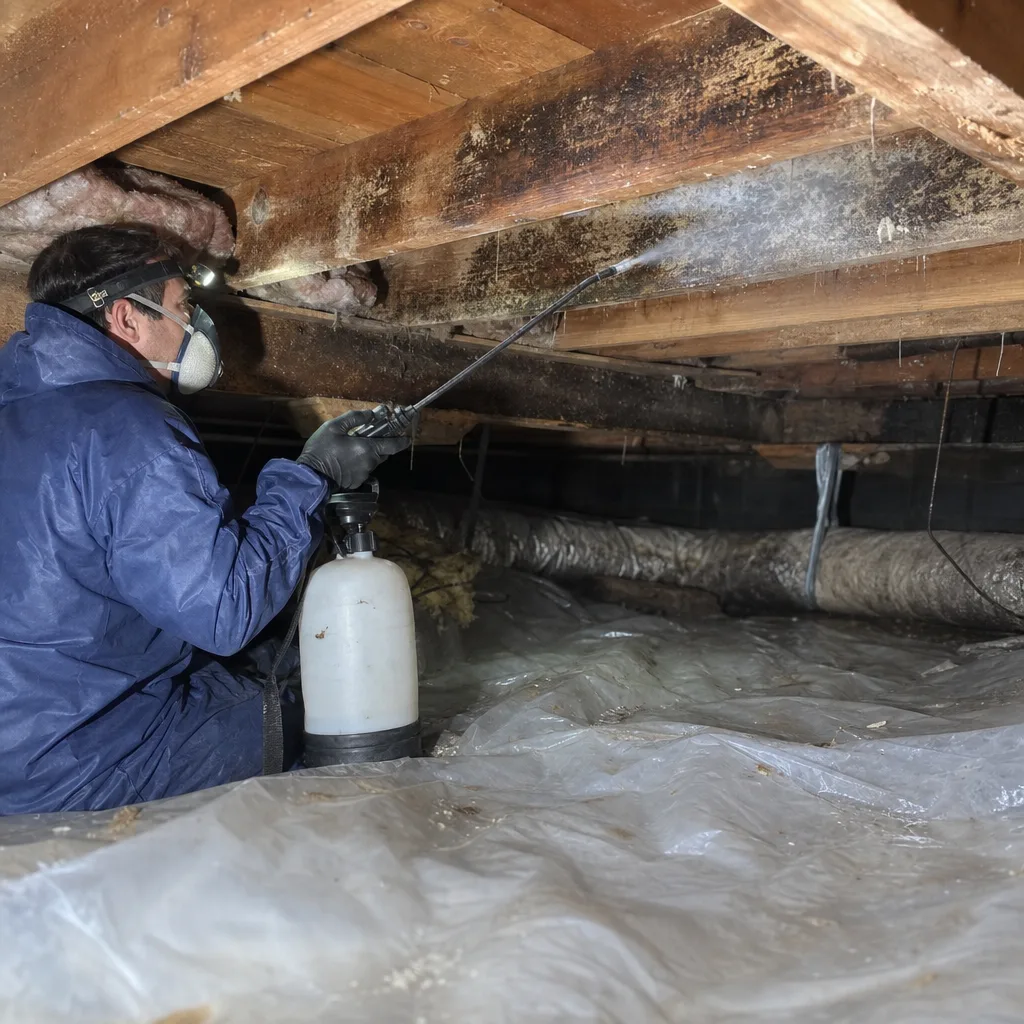
Some situations demand immediate professional response regardless of your DIY capabilities. Call a restoration contractor immediately if you discover standing water affecting multiple rooms, water contacting electrical systems or panels, sewage backup of any volume, visible mold growth exceeding 10 square feet, fire or smoke damage with structural involvement, or any water damage in a home with occupants who have respiratory conditions or compromised immune systems.
For contained, single-room water damage with no contamination and immediate access for extraction, you may manage initial response yourself - but document everything with photos and moisture readings, and call for professional assessment within 24 hours to confirm drying completeness. Incomplete drying is the most common cause of secondary damage we encounter in Redmond homes, particularly in the tight building envelopes common in 1990s-2010s construction.
DryMark Restoration Redmond offers free estimates in Redmond - call (425) 689-8468. Our live dispatch answers every call, 24 hours a day, 7 days a week, with no voicemail trees. Every estimate is written before work begins, every visit is photo-documented, and every job carries the 365-Day Done Right Promise under The Haven Standard.
Frequently Asked Questions
Water damage restoration in Redmond typically ranges from $3,200 for limited Class 1 kitchen leaks to $18,000+ for Class 3 whole-house events with hardwood flooring involvement. Class 2 damage affecting multiple rooms with wicking into walls averages $6,500-$12,000. These ranges reflect King County labor rates and the tighter building envelopes common in Redmond’s newer construction. Call (425) 689-8468 for a written estimate specific to your situation - estimates are free.
Coverage depends on your policy type, cause of loss, and whether you have replacement cost or actual cash value coverage. Sudden, accidental water damage is typically covered; gradual leaks and maintenance-related issues often are not. Your contractor’s documentation quality directly affects claim payment - incomplete drying logs and missing photos are the leading causes of partial denial. At Back to Dry, we produce the daily moisture documentation that turns restoration invoices into payable claims. Call (425) 689-8468 and we’ll review your policy terms as part of our free estimate process.
For emergency mitigation - water extraction, board-up, initial drying setup - legitimate Redmond contractors should arrive within 2-4 hours for active water losses. Reconstruction is scheduled, not dispatched; it requires material ordering, permitting when structural elements are involved, and crew assignment. Any contractor promising same-day reconstruction is either misrepresenting the work type or cutting corners on permits and planning. Our live dispatch at (425) 689-8468 answers immediately, 24/7, with technician ETA provided on every call.
Mold growth exceeding 10 square feet, or any growth resulting from Category 2 or 3 water damage, requires professional remediation under IICRC S520 standards. DIY cleaning of visible mold often removes surface growth while leaving viable hyphae in porous materials, leading to recurrence within weeks. In Redmond’s humid winter climate, incomplete remediation typically fails within one heating season. Professional remediation includes containment, negative air pressure, HEPA filtration, and post-remediation verification - none of which are achievable with consumer products. Call (425) 689-8468 for assessment; we offer free second opinions on competitor remediation scopes.
Both. You retain control of your claim; your contractor provides the evidence that supports it. The most successful claims involve direct coordination: the contractor attends joint inspections, shares documentation proactively, and responds to adjuster questions with specific data. At Back to Dry, we coordinate directly with adjusters while keeping you copied on all communications. You remain the policyholder; we remain the evidence provider. This structure prevents the common scenario where information gaps delay payment by weeks.
Ask to see a redacted drying log from a completed job, request their Washington State contractor license number and verify it online, confirm they’ll produce five documents before work starts (written estimate, scope of work, baseline moisture readings, equipment placement plan, and start date confirmation), and ask for their warranty in writing with specific terms and duration. Any hesitation on these requests is informative. At DryMark Restoration Redmond, we welcome these questions - they’re the same ones Alicia Brennan asked as a claims adjuster before founding Back to Dry in 2011.
The Bottom Line
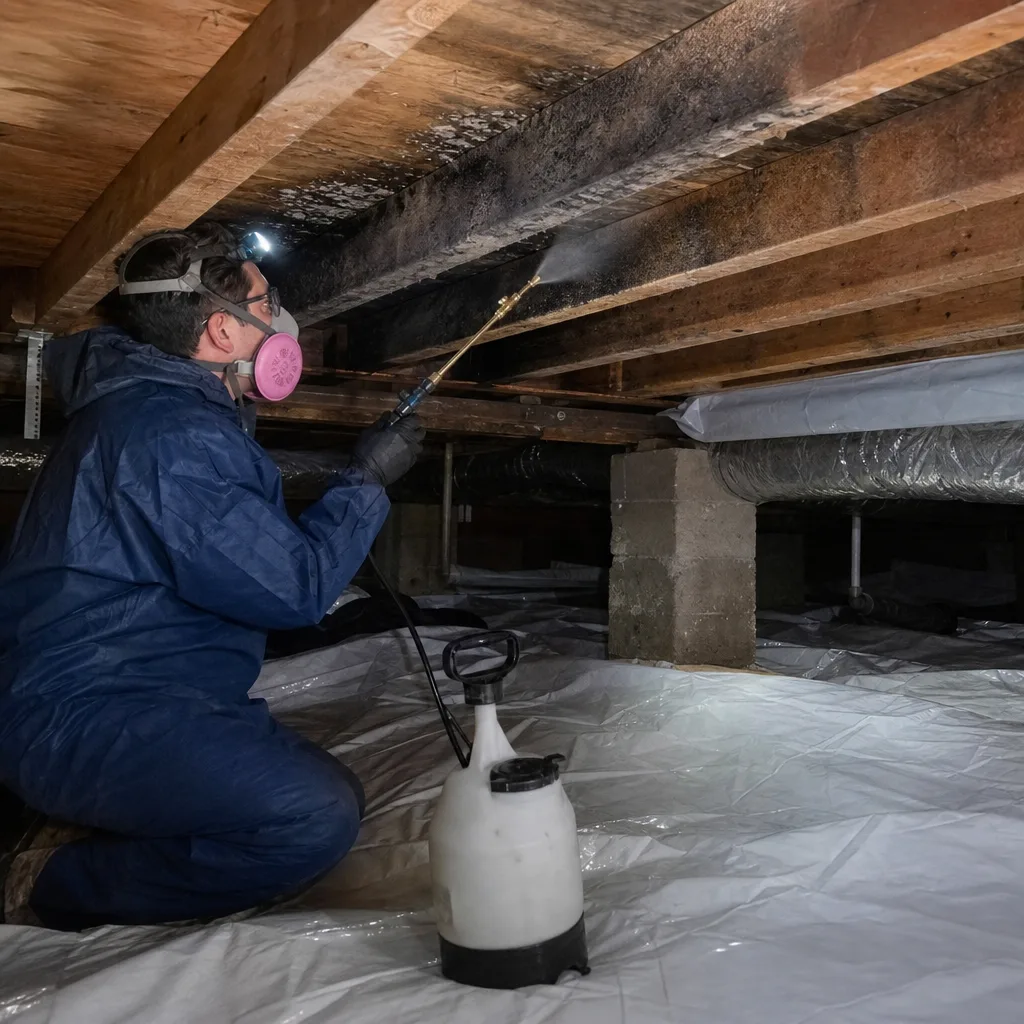
Hiring a restoration contractor in Redmond is not about finding the friendliest salesperson or the fastest arrival time. It’s about finding a company that produces evidence: written prices before work starts, documented moisture readings, photo records on every visit, and a warranty with enough duration to survive our seasonal cycles. The five documents, the license verification, the estimate literacy, and the structured adjuster coordination we’ve outlined here are not extra steps - they’re the minimum threshold for a claim that gets paid and work that lasts. Everything else is noise. The contractor who can show you their documentation without hesitation is the one who will still be accountable when the equipment is gone and the adjuster has moved to the next file.
Written by Alicia Brennan, Owner at DryMark Restoration Redmond, serving Redmond since 2011.