
Free visual inspection and a written scope of work before any mitigation begins - photos, moisture readings, and drying logs go in your claim file
The scope we write is the scope we bill. Anything new gets shown to you, in writing, before we touch it.
 Before
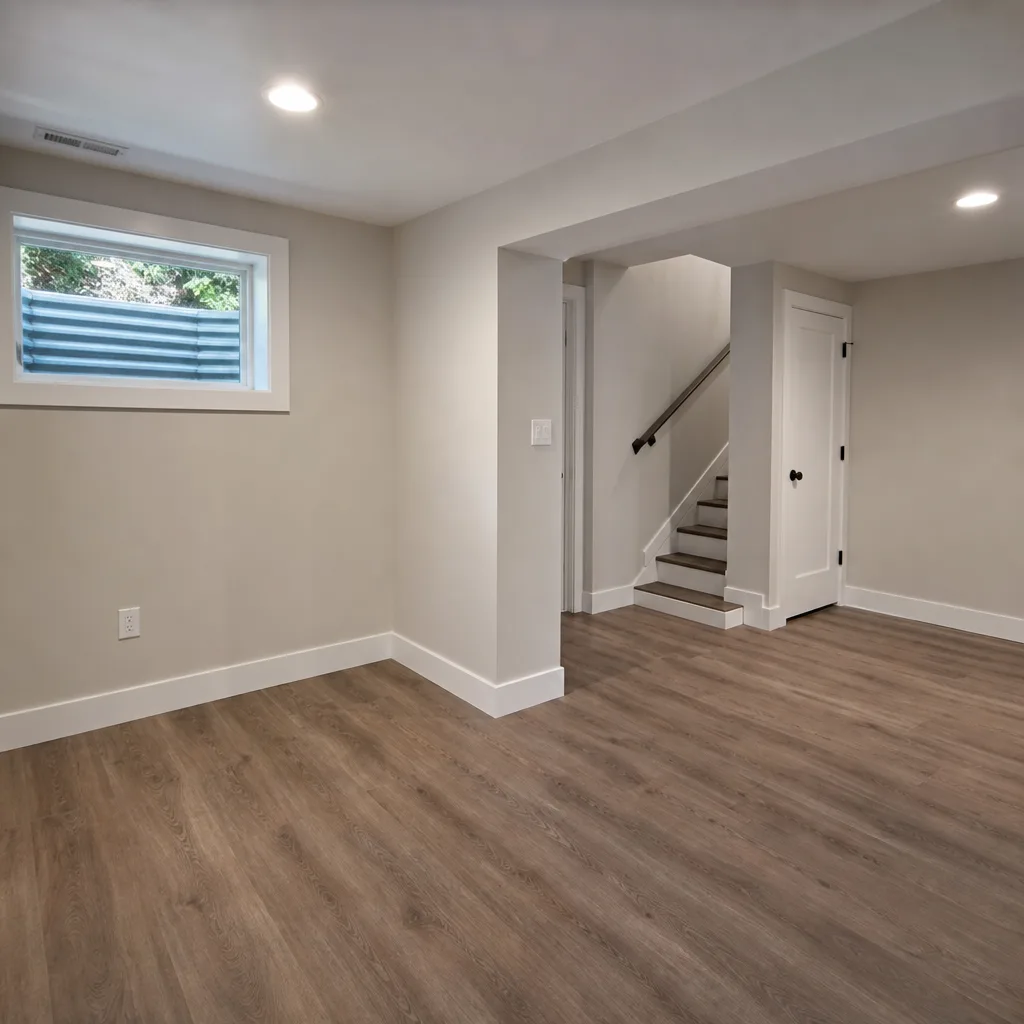 After
After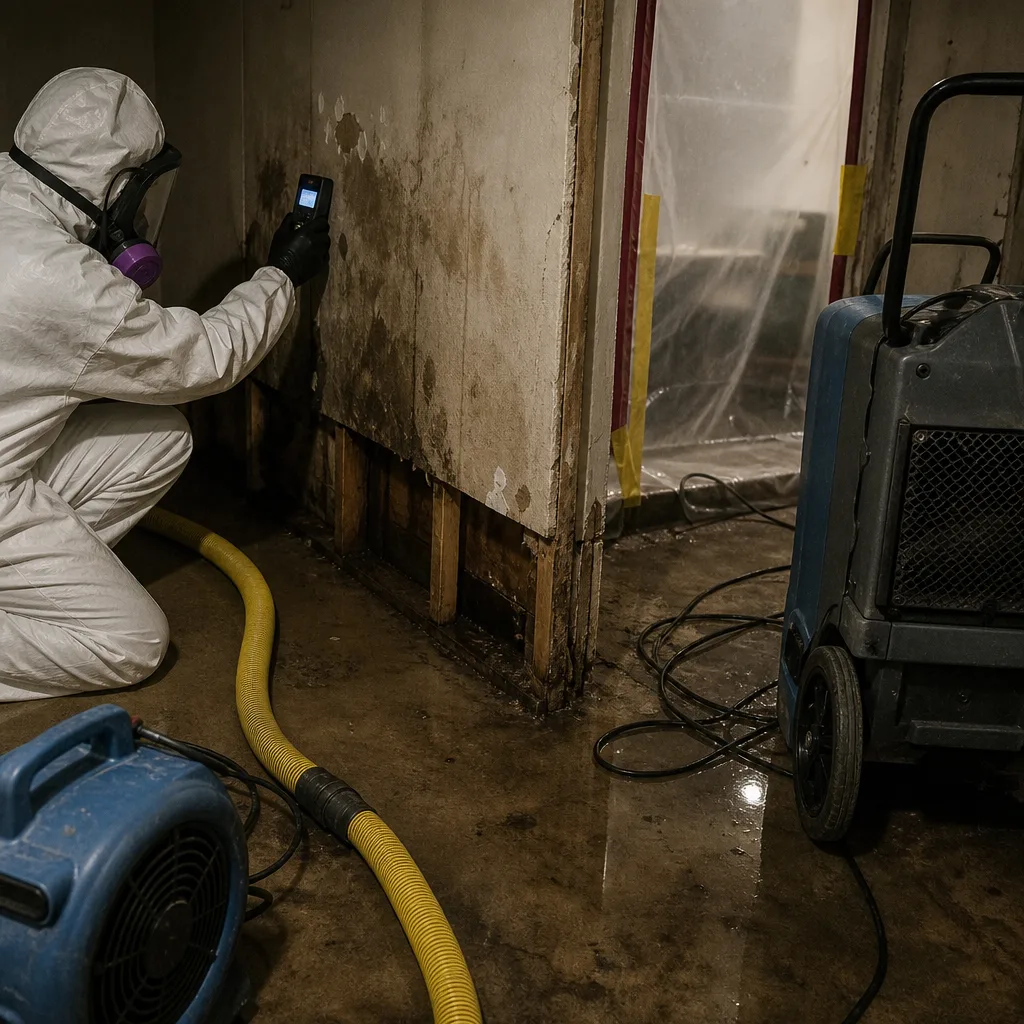 Before
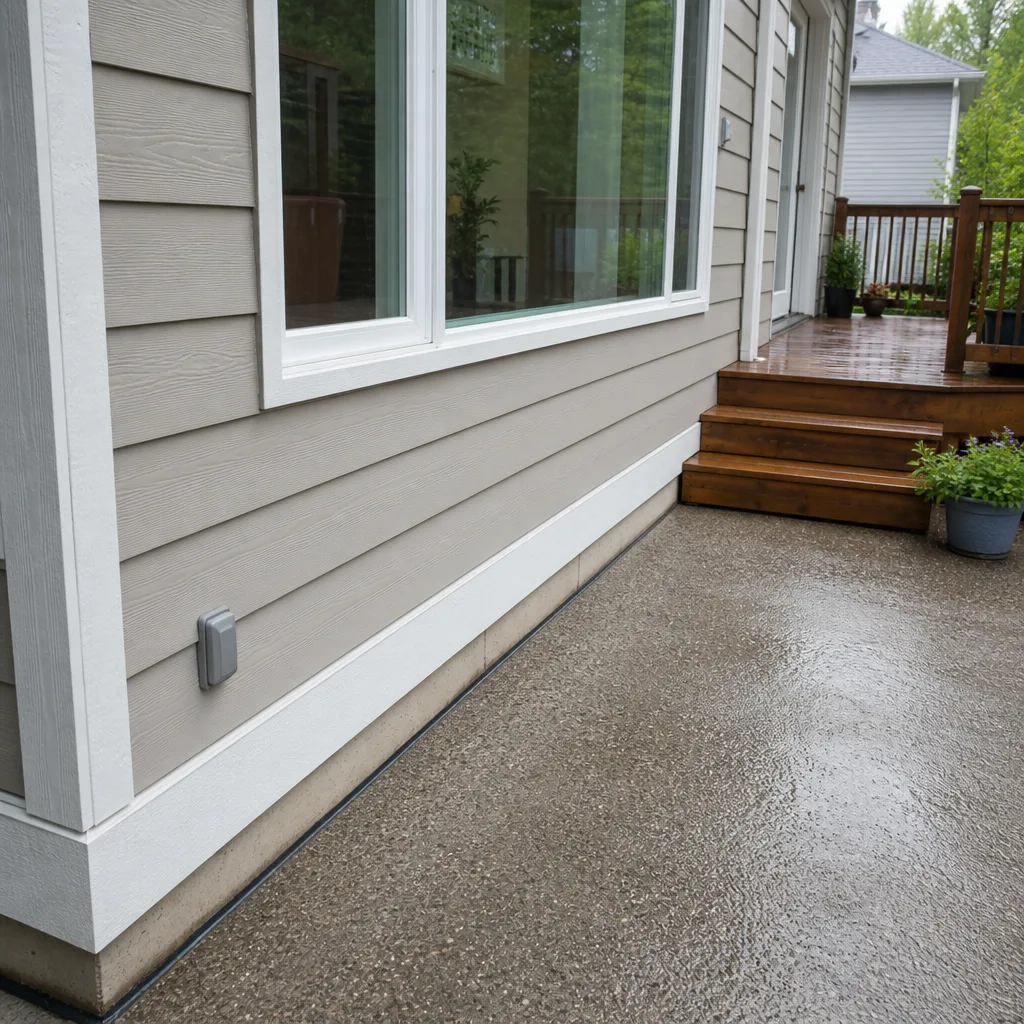 After
After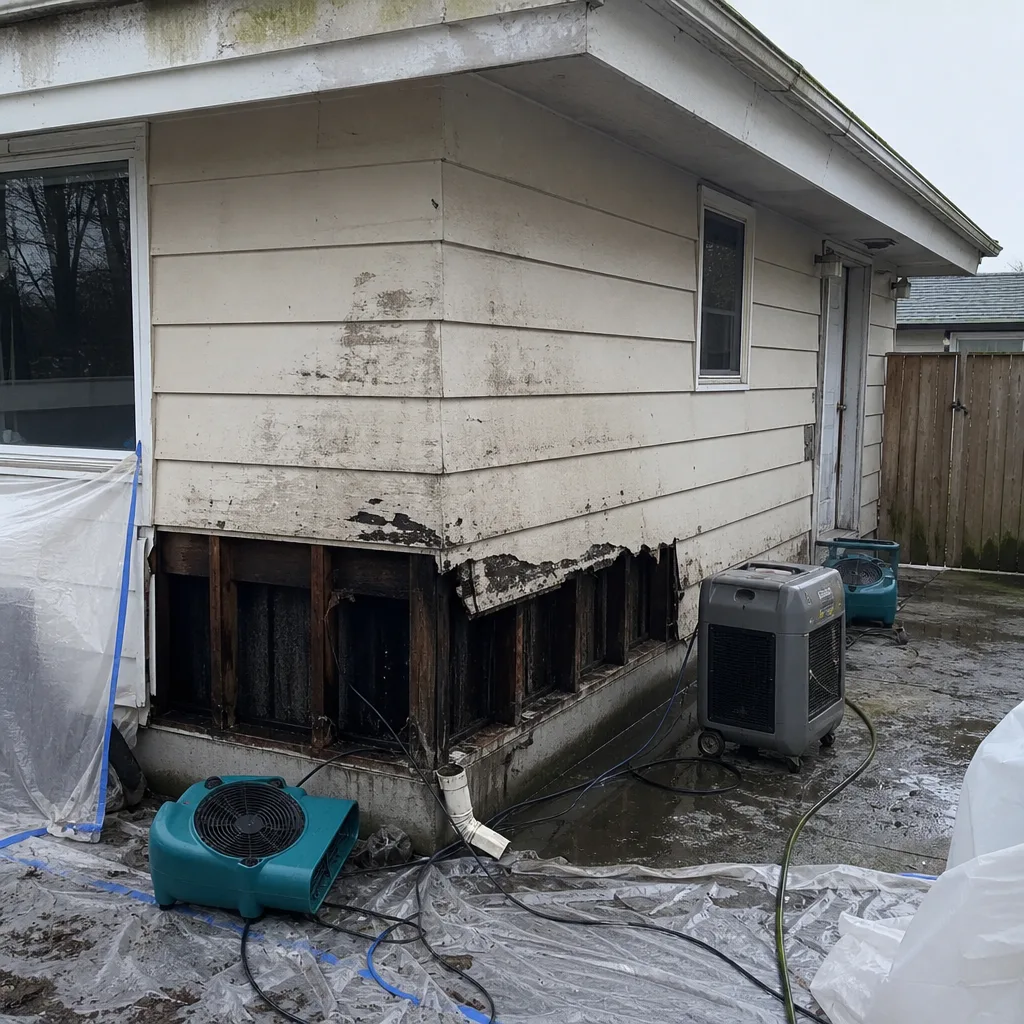 Before
 After
AfterFast, Reliable Water Damage Restoration Across Bainbridge Island
Water damage restoration in Bainbridge Island typically costs $2,800-$7,500 for a standard residential dry-out, with emergency extraction starting at $1,200-$2,400 and full structural drying running $180-$340 per day of equipment deployment. Most extraction calls are answered by a live person and crews are on-site within 1-2 hours for island-staged properties, though ferry-dependent arrivals from Seattle can stretch that to 2-4 hours depending on sailing schedules. Call (425) 689-8468 for a written estimate before any work begins.
We’re Back to Dry Restoration, and we’ve built our Bainbridge Island operation around a logistics problem that mainland companies rarely confront: every off-island crew and piece of drying equipment must cross either the Washington State Ferry (sailings roughly every 35-60 minutes) or Agate Pass Bridge. That constraint shapes everything we do here. Our Dri-Eaz and Phoenix dehumidifiers, Injectidry cavity-drying systems, and moisture meters are staged on the island itself, not sitting in a Seattle warehouse waiting for the next boat. When water is still moving through your subfloor or wicking up your drywall, ferry cycles matter. Mold colonization begins in 24-48 hours. Waiting two sailings for extraction is not a plan.
Our Water Damage Restoration team serves homes from Winslow to Rolling Bay, from pre-WWII craftsman cottages with original wood framing to newer custom builds on waterfront lots. Dispatch and scheduling are coordinated from our Seattle office, but the crews and equipment that reach your door are island-based. That’s the difference between a company that “services” Bainbridge Island and one that operates here.
Why Back to Dry Restoration Is Bainbridge Island’s Preferred Water Damage Restoration Company
We’ve restored water damage in 12,000+ homes since 2011, every one with a written price before work started and a documented photo record when the crew left. Alicia Brennan founded this company after years as a claims adjuster watching homeowners lose coverage fights because restoration companies couldn’t produce the paperwork. That origin still defines us. On Bainbridge Island, where high-value custom homes and original craftsman details are common, documentation isn’t bureaucracy. It’s what saves your reclaimed-wood beams and built-in cabinetry from becoming a coverage dispute.
Our technicians are background-checked, uniformed, and named on every job. Their license numbers are available on request. We don’t send anonymous crews. Every call to our emergency line reaches a live person, 24 hours a day, 7 days a week. No voicemail trees, no next-business-day callbacks while water is still migrating through your crawl space.
The 365-Day Done Right Promise backs every job under The Haven Standard: if it’s not done right, we make it right. Not a verbal assurance. A signed guarantee. Haven Standard, Clause 1 requires a written price before any work starts, every time, with no scope-creep additions once the crew is inside your home. We also offer a Free Second Opinion on any competitor’s written estimate. Bring another company’s quote and we’ll review it at no charge.
Our Water Damage Restoration Services in Bainbridge Island
Emergency Water Extraction
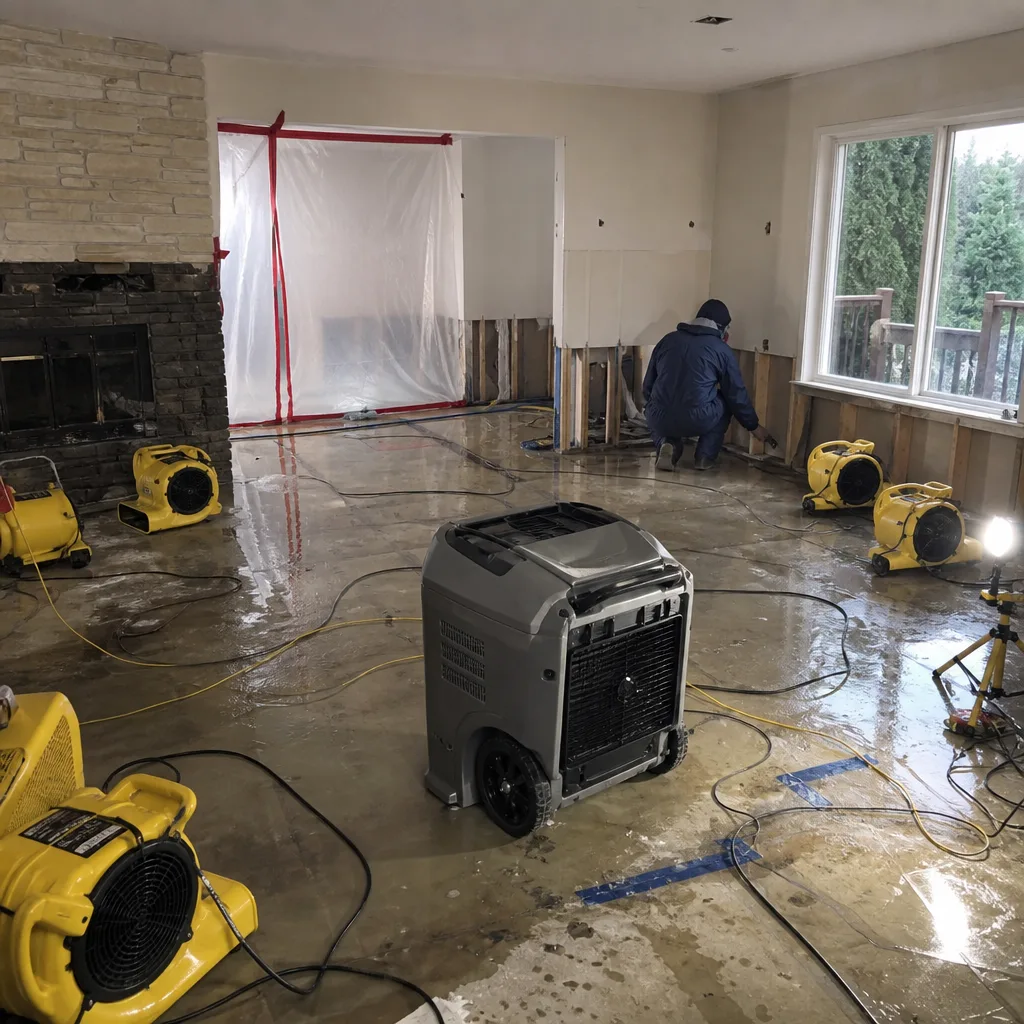
When a supply line fails in a Winslow kitchen or a washing machine overflows in a Fletcher Bay weekend home, standing water doesn’t wait. Our island-staged extraction rigs - truck-mounted and portable units - remove bulk water within hours, not after ferry delays. We document pre-extraction moisture readings with calibrated meters, photograph every affected room, and deliver a written scope before dehumidifiers start running. For Category 1 clean water events, same-day extraction is standard. For Category 2 or 3 contamination, containment protocols go up first.
Structural Drying & Dehumidification
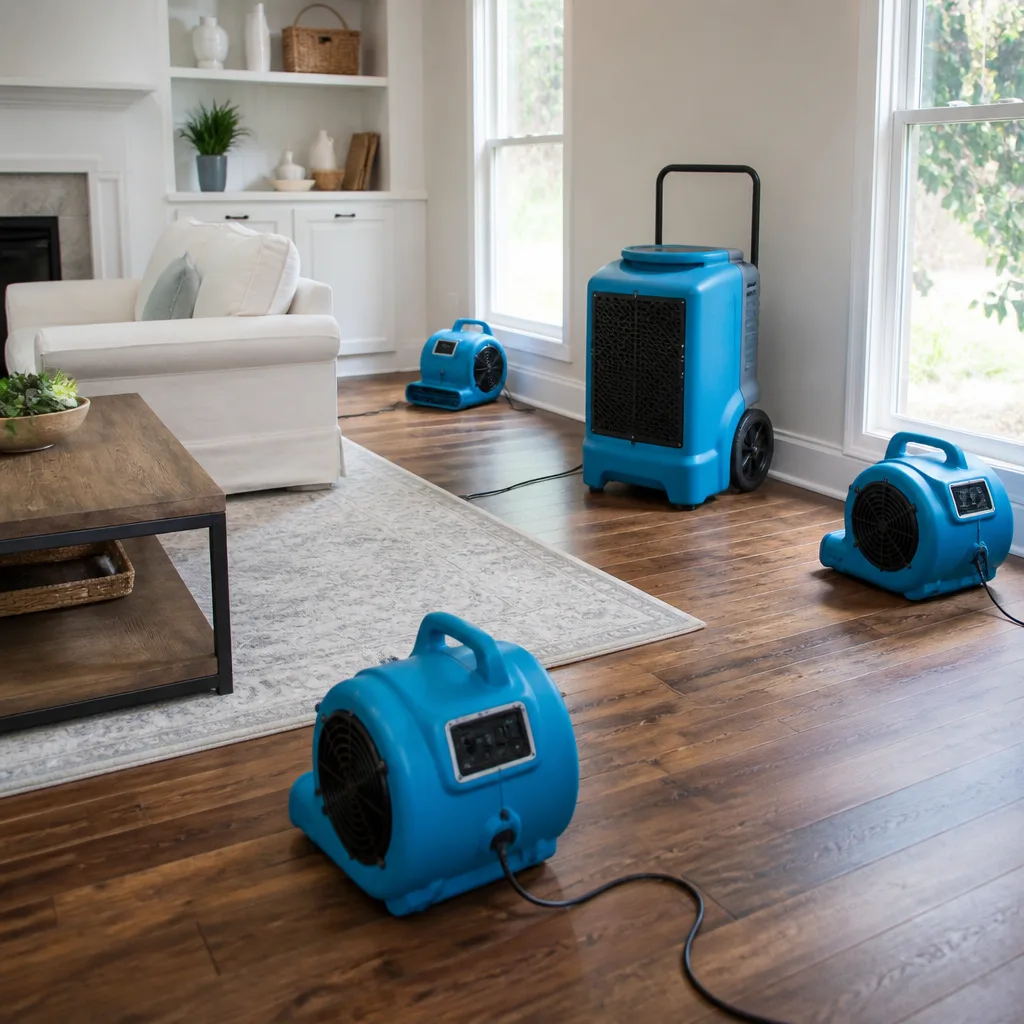
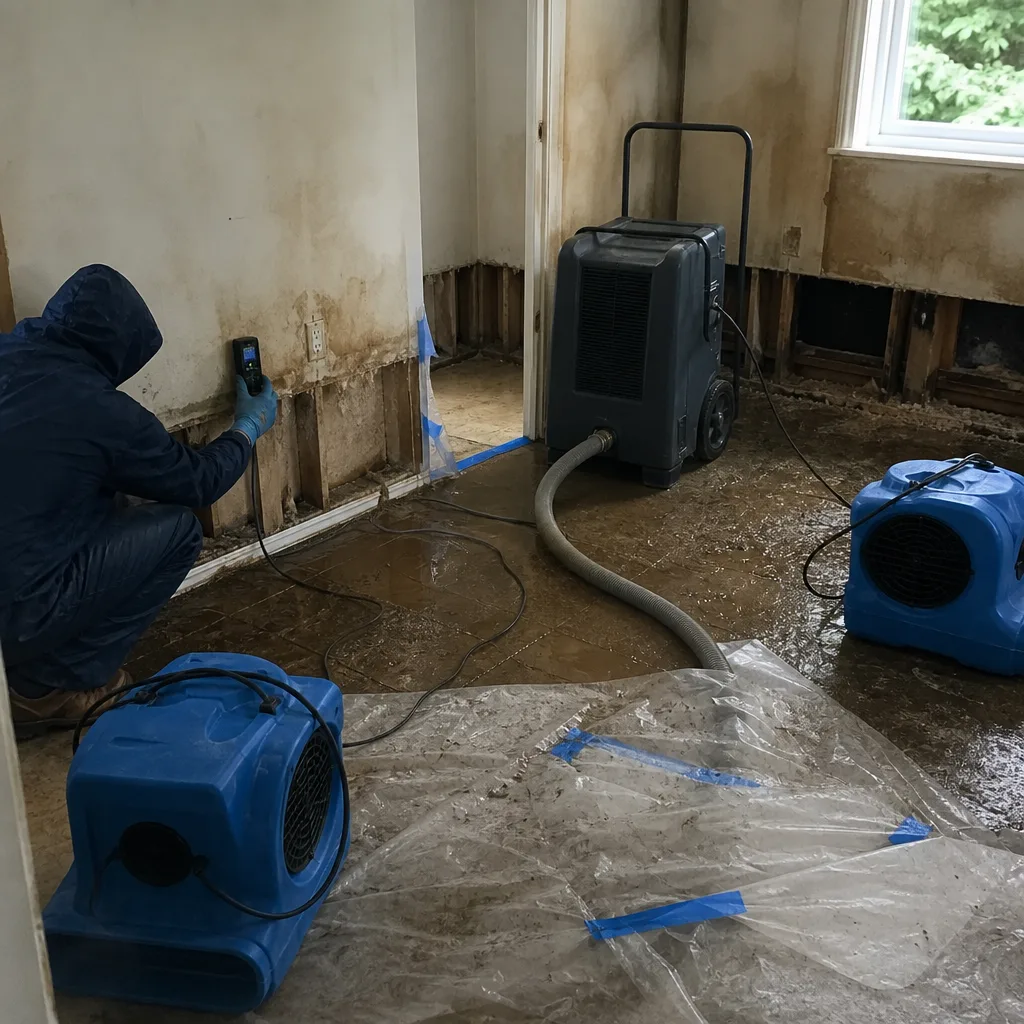
Bainbridge Island’s dense Douglas fir and cedar canopy blocks sun and airflow for much of the year, slowing evaporative drying dramatically. A crawl-space subfloor that might hit dry standard in four days on an exposed mainland lot can need seven to ten days here. We plan for that. Our crews deploy psychrometric monitoring - measuring temperature, relative humidity, and vapor pressure differential to calculate exactly how much moisture the air can hold and how fast materials will release it. Daily drying logs track every reading, producing the documentation that turns restoration invoices into payable insurance claims. We use Dri-Eaz and Phoenix dehumidification systems, Injectidry cavity-drying for enclosed spaces, and B-Air air movers positioned for airflow patterns specific to your home’s layout.
Flood Cleanup
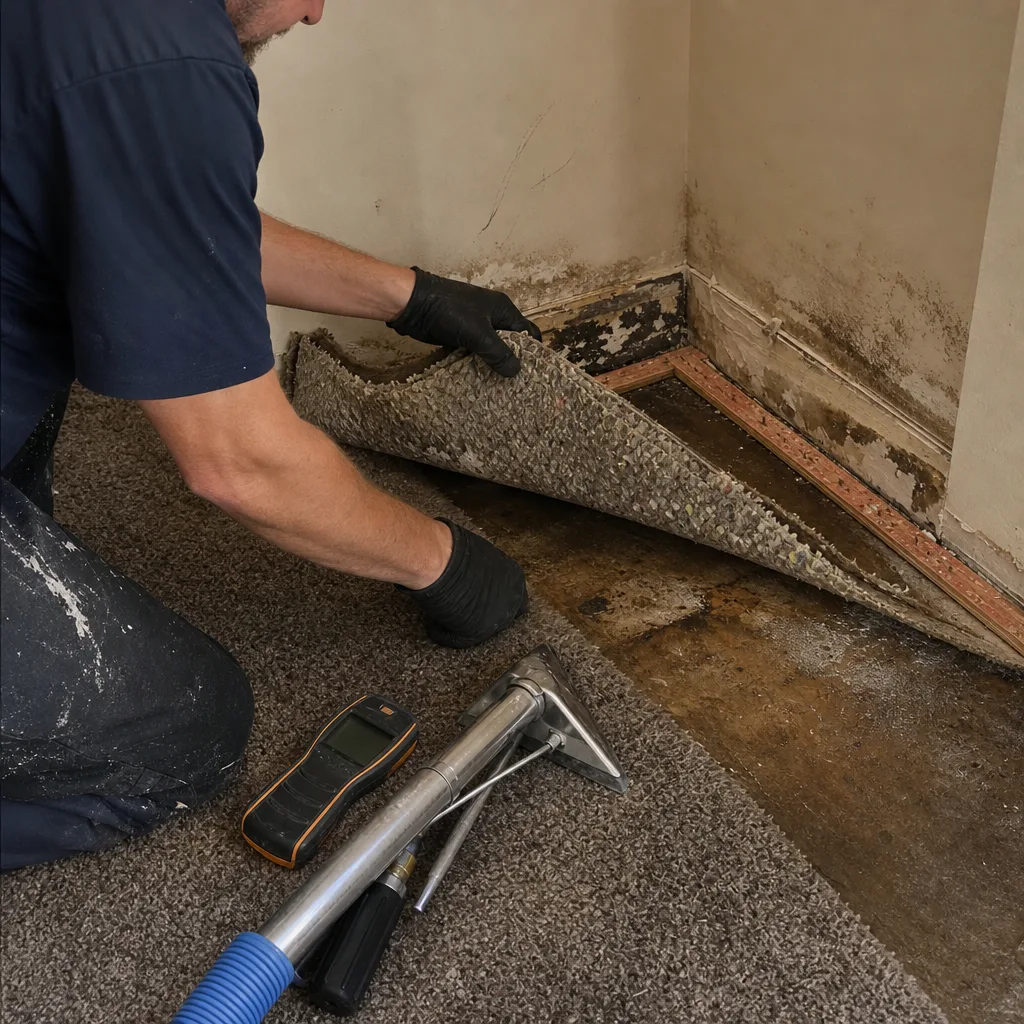
Bainbridge Island’s 35-55 inches of concentrated October-to-April rainfall, combined with sloped wooded lots and aging drainage infrastructure, makes seasonal flooding a recurring issue. Properties near ravines or on hillside cuts see groundwater intrusion that overwhelms perimeter systems. Our flood cleanup includes contaminated material classification by trade name (Category 1, 2, or 3 per IICRC S500 standards), written disposal scope, and photo-documented clearance testing before rebuild. For homes on private septic systems - the majority outside Winslow - floodwater mixing with on-site waste requires Category 3 antimicrobial protocols and specialized hauling logistics that municipal-sewer backups don’t.
Burst Pipe Restoration
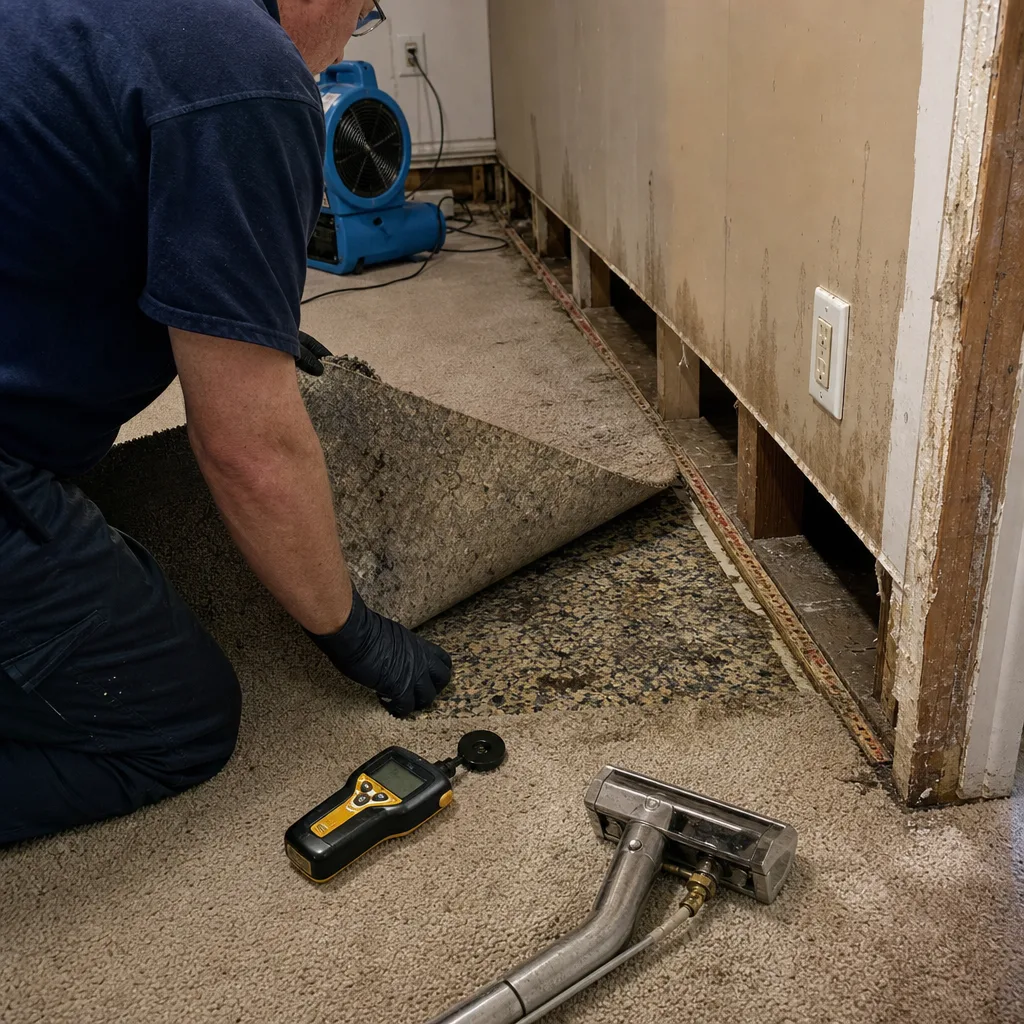
Island homes, especially unoccupied seasonal properties, suffer burst pipes when heating systems fail during cold snaps. The damage often runs unseen for days. We map moisture migration with infrared cameras and non-penetrating meters, then open cavities surgically to dry structural members without destroying finished surfaces unnecessarily. For pre-WWII craftsman homes with original wood framing, we adjust drying temperatures and airflow rates to prevent over-drying that can crack old-growth timber. Every step is logged, photographed, and written into the scope you sign before work proceeds.
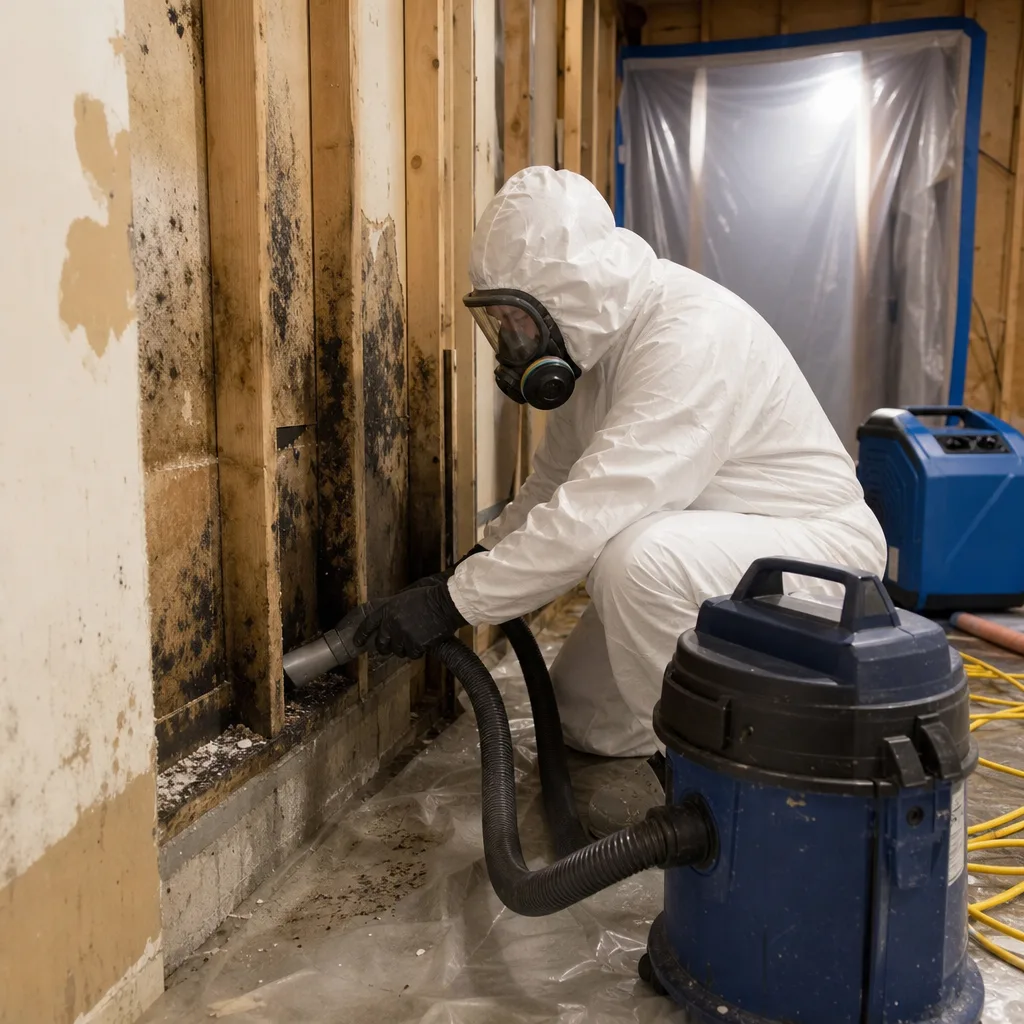
Ceiling & Roof Leak Water Damage
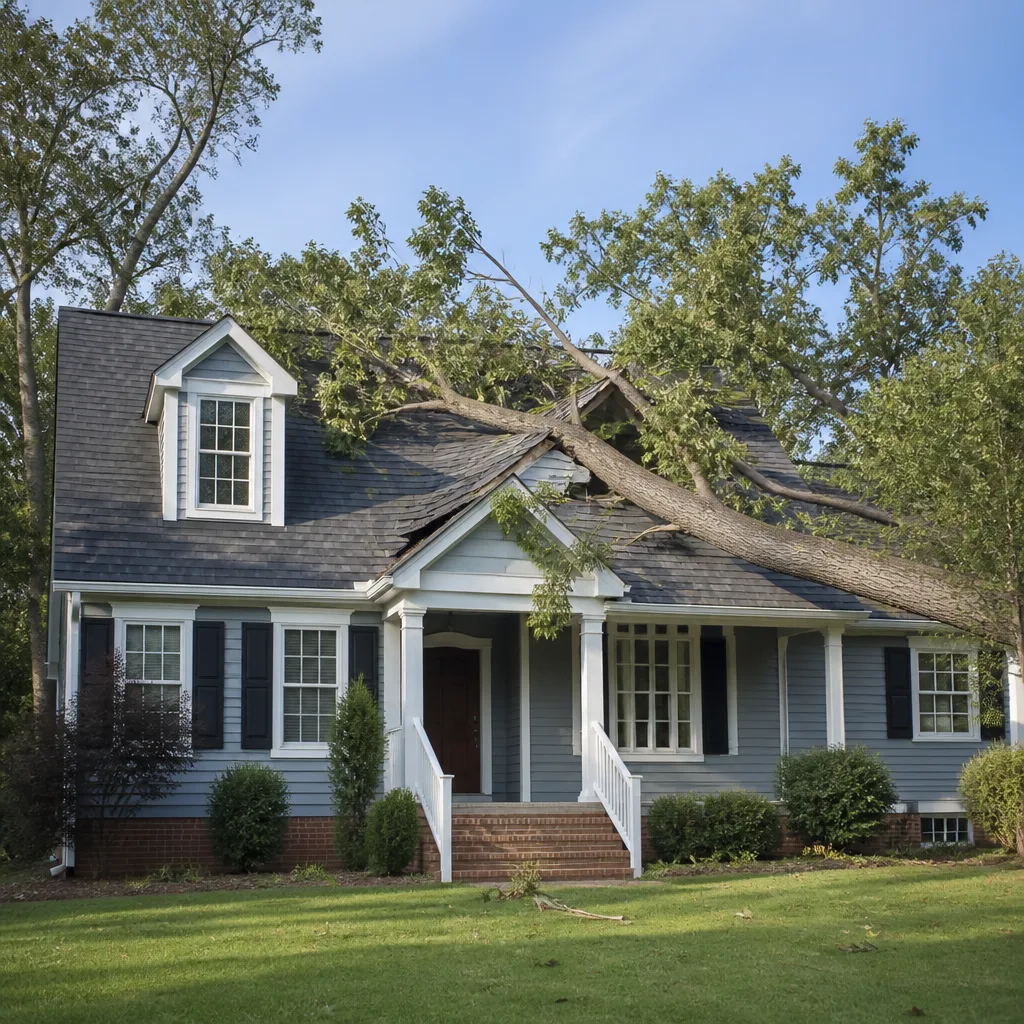
After a January windstorm dropped a Douglas fir through the roof of a custom waterfront home near Rolling Bay, our crew was on-site before the next ferry cycle because our gear is staged on the island. We ran moisture mapping across the wet cathedral ceiling, set containment to keep the rest of the custom-milled interior dry, and logged Dri-Eaz and Phoenix dehumidification readings every four hours until the subfloor cavity hit dry standard. The homeowners’ reclaimed-wood beams and built-in cabinetry were saved because the structural drying started the same day, not after a two-sailing wait for a Seattle crew. Wind-throw events - large conifers falling onto roofs - are a recurring winter scenario here, and ceiling leak damage demands the same rapid response whether the breach is a single shingle or a trunk through the rafters.
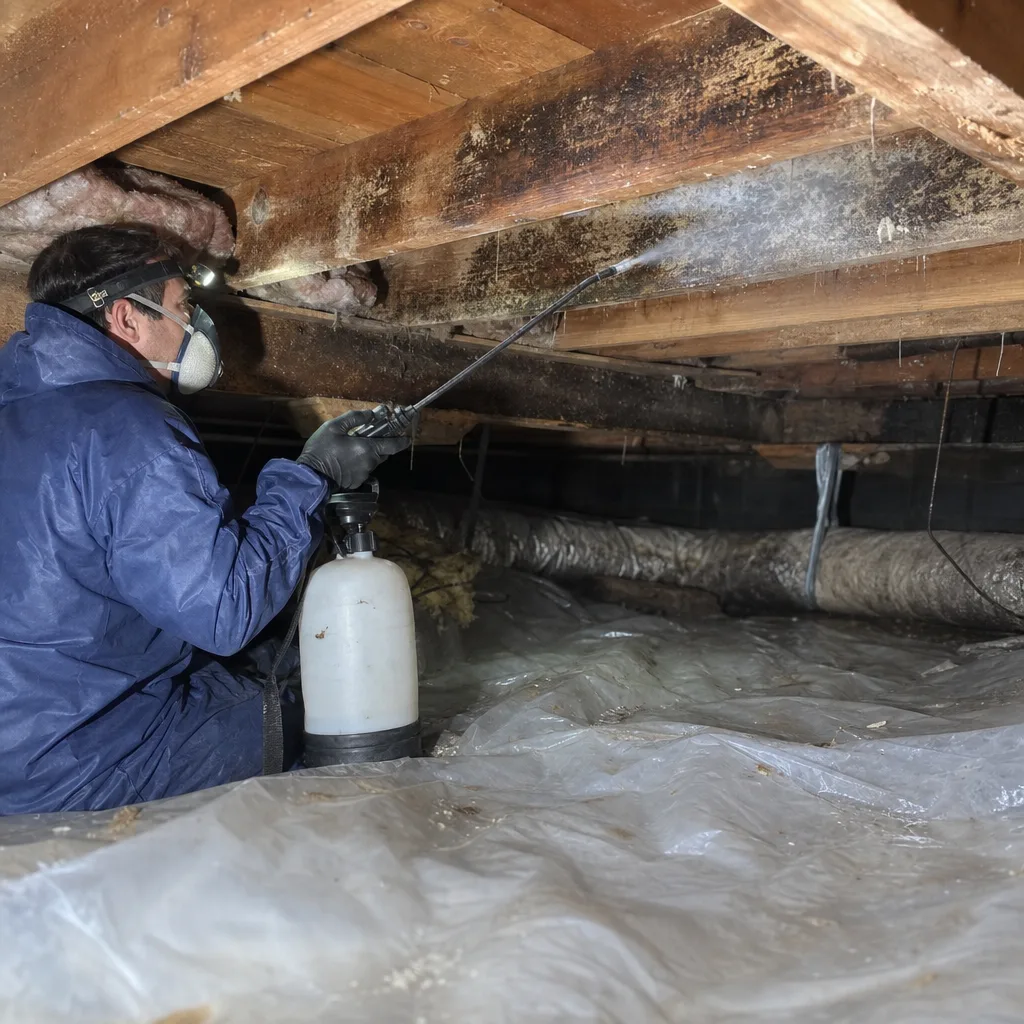
Basement Water Removal & Crawl-Space Drying
Most Bainbridge Island homes sit on crawl-space foundations rather than basements, making chronic subfloor moisture intrusion a far more common restoration trigger than in slab-foundation markets. We see it constantly: vapor barrier failures, groundwater wicking through untreated soil, condensation on ductwork in unventilated cavities. Our crawl-space drying protocols include sub-membrane extraction, directed airflow through floor joist bays, and tertiary drying phases that continue until wood moisture content reads below 16 percent. The documentation includes crawl-space photos, moisture-content graphs, and a written dry-standard clearance.
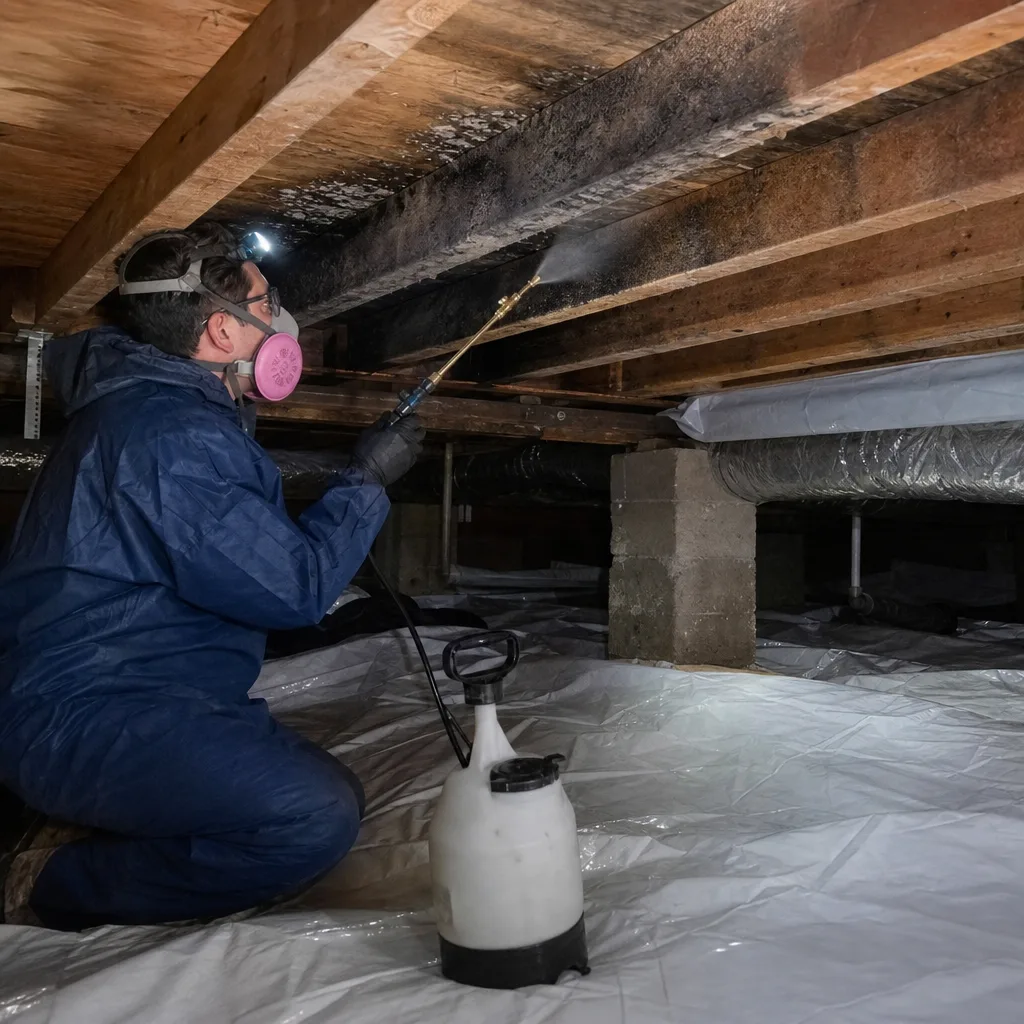
What happens when you call
- 1
A real person answersNo phone trees - you reach a local pro.
- 2
You get an upfront price rangeHonest numbers before anyone is dispatched.
- 3
A background-checked tech heads outLicensed & insured, dispatched right away.
- 4
You approve before work beginsNothing starts until you say go.
 Before
 After
AfterTrusted Equipment & Standards We Deploy in Bainbridge Island
We don’t buy equipment for brand names. We buy it because it produces the psychrometric data that insurers accept. Our island-staged inventory includes Dri-Eaz and Phoenix refrigerant dehumidifiers, Injectidry interstitial drying systems for wall and ceiling cavities, and B-Air axial air movers. All work is documented to IICRC, RIA, and IFA standards. That documentation - daily moisture logs, photo records on every visit, written scopes with line-item pricing - is included as standard deliverables, never upsells. When your adjuster asks for proof of dry standard, we hand them a file, not an apology.
Common Water Damage Restoration Problems We See in Bainbridge Island Homes
- Ferry-dependent response failures. Calling a Seattle-based restoration company that must wait one or more ferry cycles to bring crews and equipment over delays water extraction past the 24-48 hour mold window. By the time dehumidifiers arrive, Category 1 water has become Category 2, and salvageable materials require replacement.
- Mainland drying timelines applied to island conditions. Bainbridge’s dense Douglas fir and cedar canopy blocks sun and airflow, stretching structural drying by days. A crew quoting four-day dry standard based on Seattle experience will miss subfloor targets here, leaving moisture that breeds mold and voids warranties.
- Septic backups treated as municipal-sewer events. Most properties outside the Winslow urban core are on private septic systems. Category 3 contamination from on-site septic failure requires different containment, antimicrobial treatment, and waste-hauling logistics than the straightforward municipal-sewer backups that dominate mainland suburban work. Misclassified jobs get red-tagged by health departments and rejected by insurers.
- Crawl-space moisture left unmapped. With most homes on crawl-space foundations, subfloor cavities hide slow leaks and groundwater intrusion that rot original wood framing. Surface drying of visible areas while ignoring the crawl space is a common shortcut that costs homeowners their structural integrity and their insurance coverage.
Pricing for Water Damage Restoration in Bainbridge Island, WA
These ranges reflect actual Bainbridge Island market pricing for 2024-2025, accounting for island logistics and the higher-value housing stock typical here:
| Service | Typical Range |
|---|---|
| Emergency water extraction (first 2 hours) | $1,200 - $2,400 |
| Structural drying & dehumidification (per day) | $180 - $340 |
| Full residential dry-out (Category 1, 1,000-2,500 sq ft) | $2,800 - $5,200 |
| Full residential dry-out (Category 2-3 or >2,500 sq ft) | $4,500 - $7,500 |
| Crawl-space drying & vapor barrier replacement | $2,400 - $4,800 |
| Ceiling/roof leak damage (extraction + drying only) | $1,800 - $3,600 |
| Written estimate & moisture assessment | Free |
Factors that move costs within these ranges: contamination category (clean water vs. gray or black water), affected square footage, material types (plaster and custom millwork dry slower than standard drywall), and accessibility (crawl spaces and vaulted ceilings require specialized equipment). Every job is quoted in writing before work begins, per Haven Standard, Clause 1. No exceptions. No scope-creep additions once the crew is inside. Call (425) 689-8468 for a written estimate - they’re free, and we deliver them on-site or by email within hours of assessment.
We Also Serve Communities Near Bainbridge Island
Our island-staged crews and mainland-coordinated dispatch serve Bainbridge Island homeowners directly, with response capability extending to Manchester across Agate Pass, and coordinated service to Seattle, Bellevue, and Mercer Island through our Seattle office. Each market gets the same written-price guarantee and documented drying protocols, but only Bainbridge Island benefits from equipment pre-staged to bypass ferry logistics.
Serving Bainbridge Island, WA - Our Local Coverage Area
We’re based in the Bainbridge Island area and know this community well. Use the map below to see our service coverage - if you’re nearby, we can almost certainly help.
FAQs - Water Damage Restoration in Bainbridge Island
Our island-staged crews typically reach Bainbridge Island homes within 1-2 hours of call receipt, including properties in Rolling Bay, Fletcher Bay, and Manzanita. Ferry-dependent companies from Seattle face 35-60 minute sailing intervals plus loading and unloading time, often stretching response to 2-4 hours or longer. For water damage, that gap can mean the difference between Category 1 salvage and Category 2 replacement. Call (425) 689-8468 - we answer live, 24/7.
Yes. Bainbridge Island’s dense Douglas fir and cedar canopy blocks direct sun and natural airflow for much of the year, and the 35-55 inches of concentrated October-to-April rainfall keeps ambient humidity elevated. Structural drying timelines here routinely run 30-50 percent longer than comparable mainland Seattle jobs. We account for this in our equipment calculations and daily moisture logs, deploying additional dehumidification capacity and extending tertiary drying phases until subfloor cavities hit documented dry standard. A crew quoting mainland timelines will likely miss.
Absolutely. Most Bainbridge Island properties outside Winslow operate on private septic systems, so sewage backups involve Category 3 on-site contamination with no municipal connection. The remediation requires different containment protocols, specific antimicrobial treatments approved for septic environments, and specialized waste-hauling logistics to licensed off-island disposal facilities. Misclassifying these as standard municipal-sewer backups leads to health department violations and insurance claim denials. We identify septic versus sewer on arrival and document the classification in your written scope before work starts.
Yes, and we adjust our protocols specifically for these structures. Original old-growth timber is denser and more dimensionally stable than modern framing, but it also dries more slowly and can crack if over-dried with excessive heat or airflow. We use lower-temperature drying regimes, targeted Injectidry cavity systems rather than aggressive demolition, and moisture-content monitoring at multiple depths to protect original joinery and millwork. The daily drying logs document every reading, preserving your home’s character and your insurance coverage. We’ve restored water damage in original craftsman homes from Winslow to Manitou Beach.
Constantly. Most Bainbridge Island homes sit on crawl-space foundations rather than basements, making subfloor moisture intrusion from groundwater, vapor barrier failure, or plumbing leaks one of our most frequent call types. Our crawl-space protocol includes sub-membrane water extraction, directed airflow through joist bays, vapor barrier assessment, and wood moisture-content testing to a documented dry standard below 16 percent. Every visit is photographed and logged. If your crawl space smells musty or your floors feel soft, call (425) 689-8468 for a free moisture assessment - early intervention prevents the rot and mold that total original subfloors.
Written by Alicia Brennan, Owner at Back to Dry Restoration, serving Bainbridge Island since 2011.