
Free visual inspection and a written scope of work before any mitigation begins - photos, moisture readings, and drying logs go in your claim file
The scope we write is the scope we bill. Anything new gets shown to you, in writing, before we touch it.
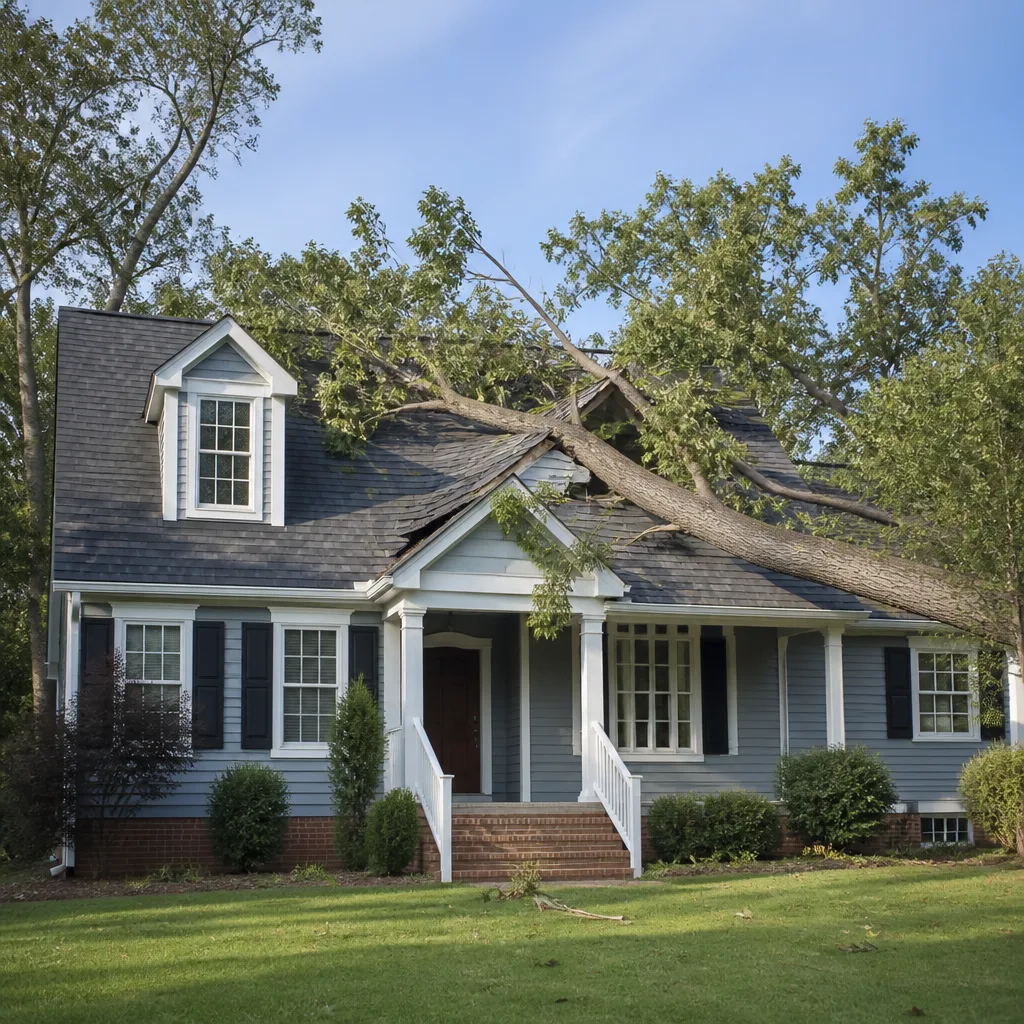
 Before
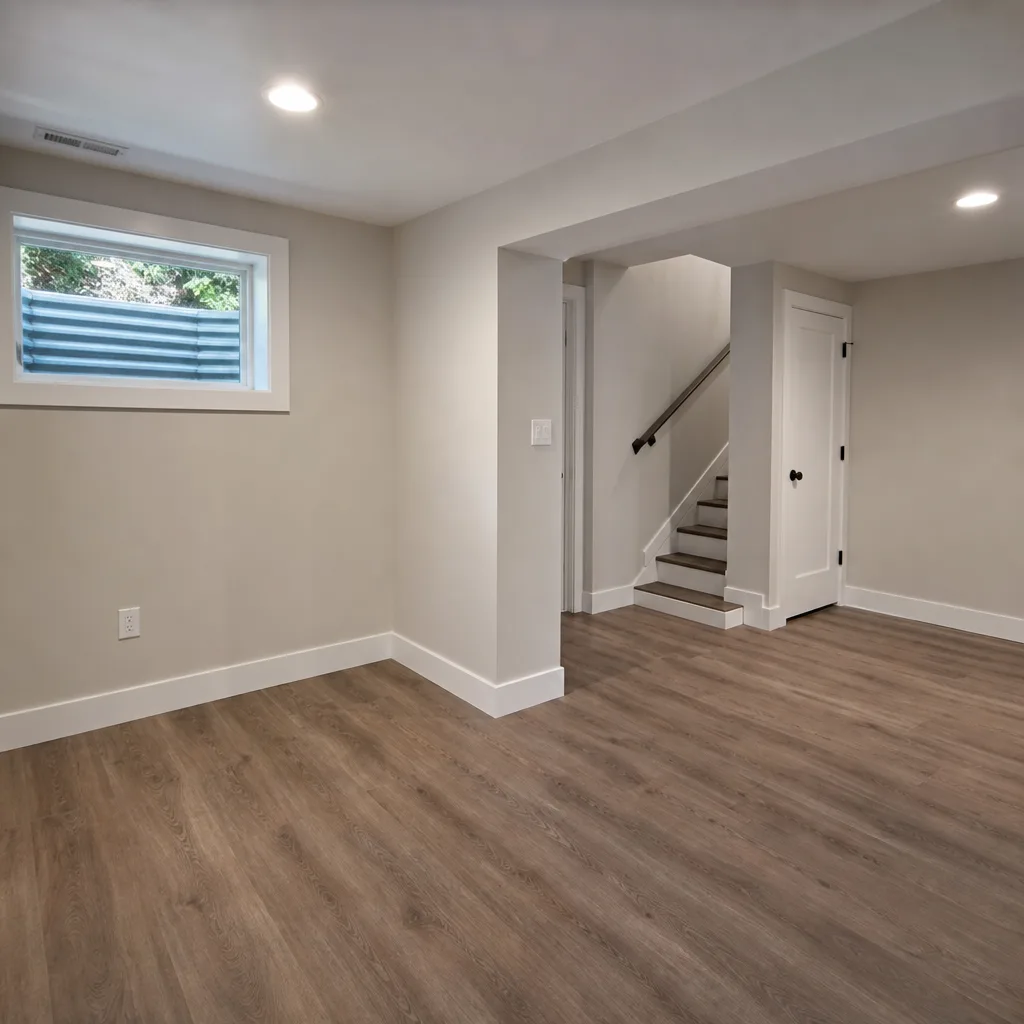 After
After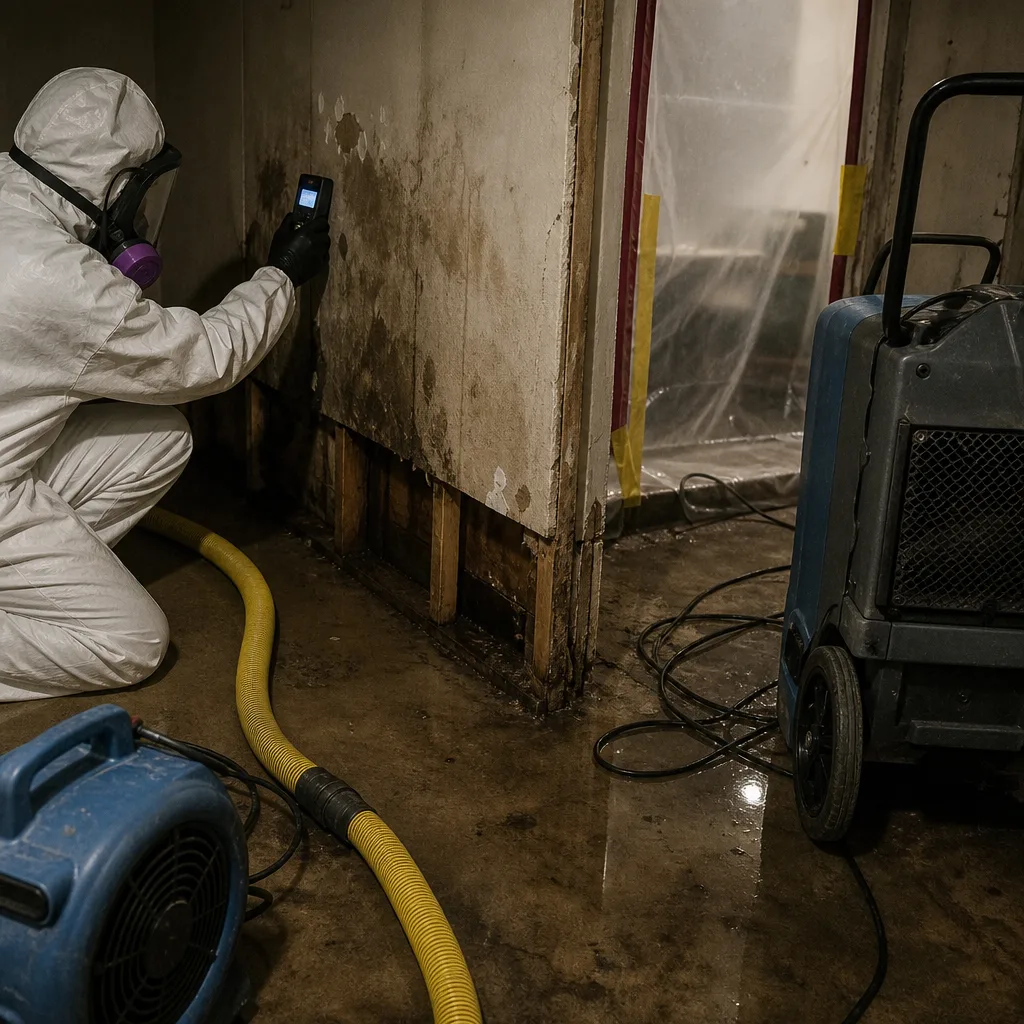 Before
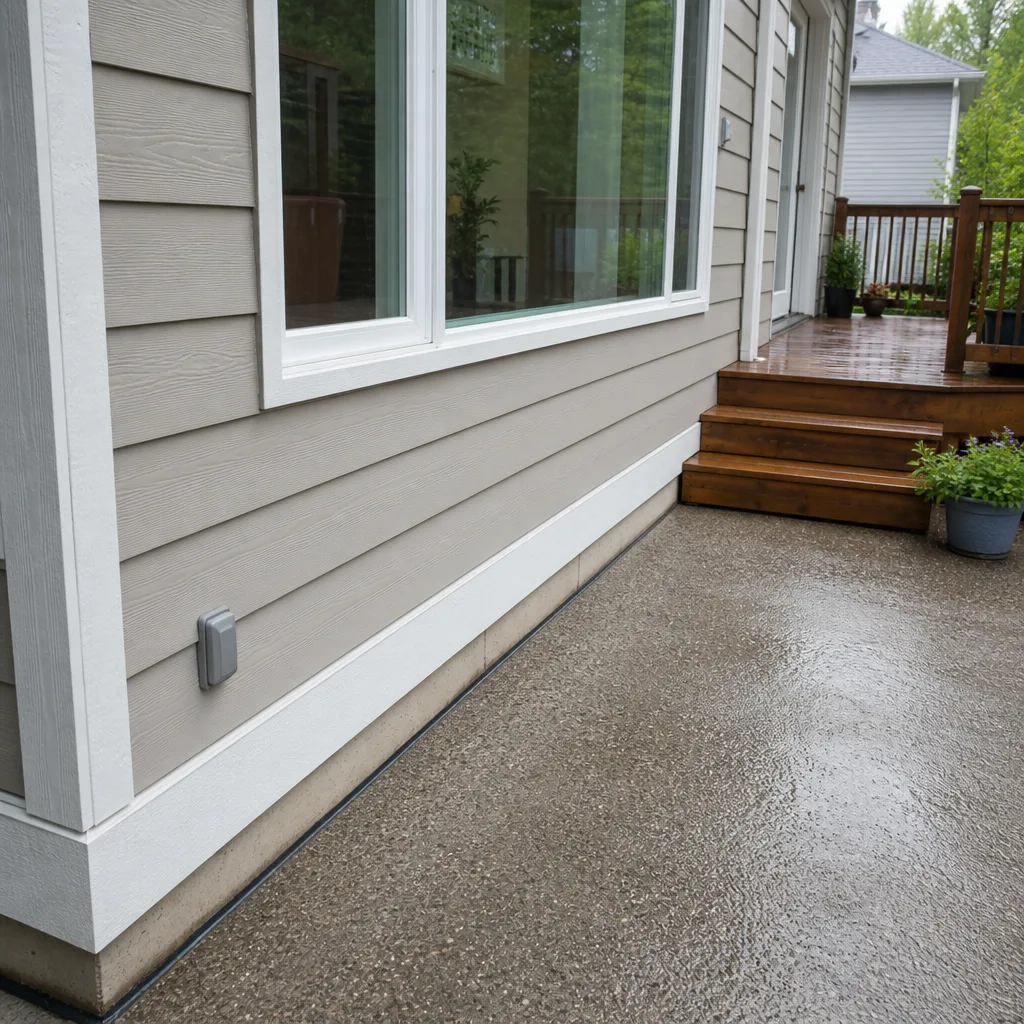 After
After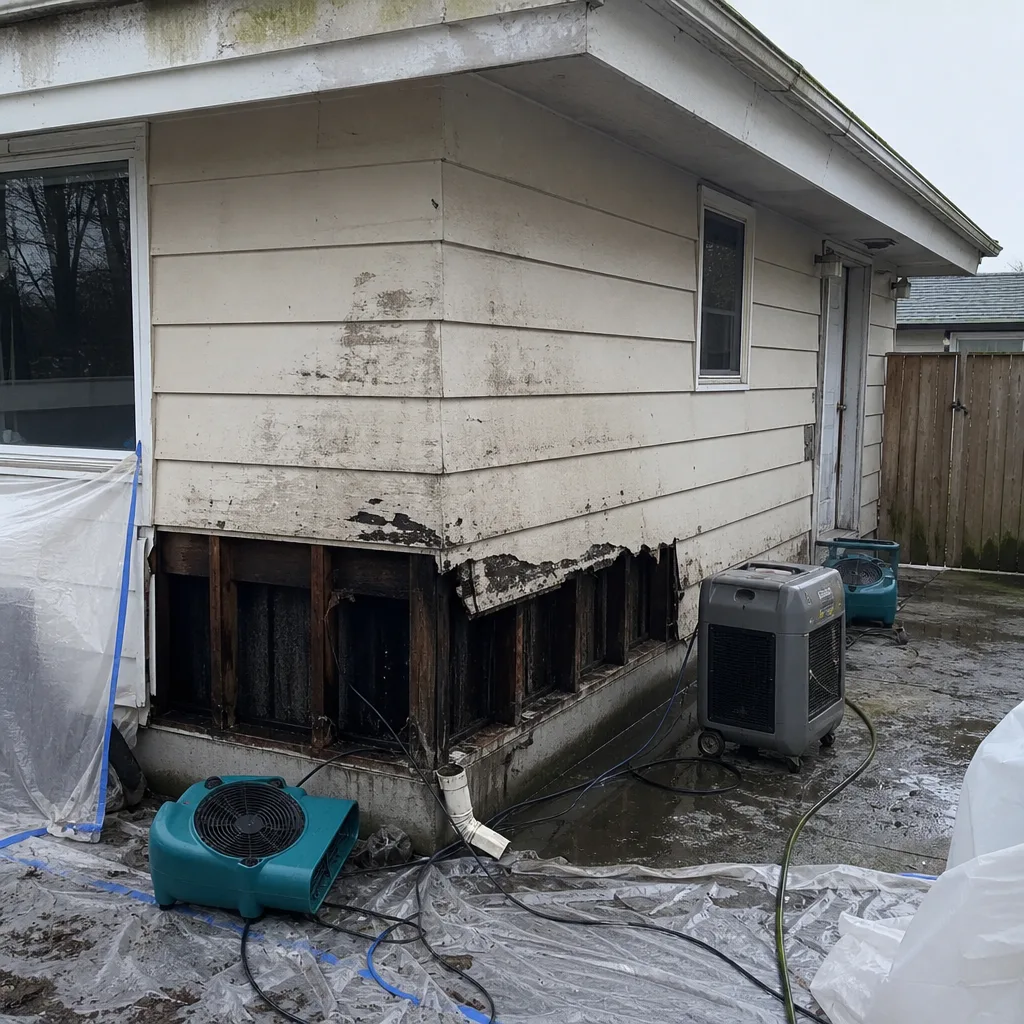 Before
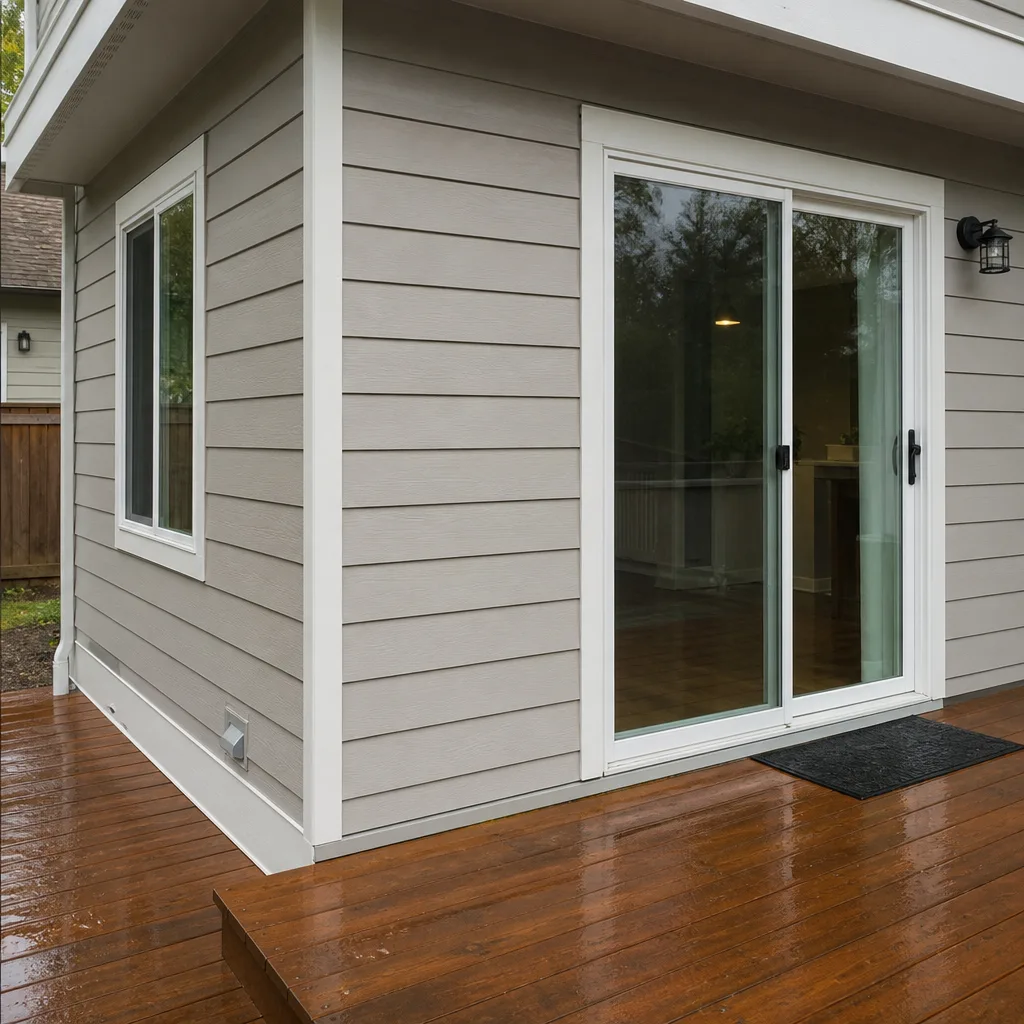 After
AfterFast, Reliable Mold Remediation Across SeaTac
Mold remediation in SeaTac typically runs $1,200-$4,500 for residential jobs, with full containment and air filtration completed in 3-5 days. For the dense hotel corridor along International Boulevard and the post-WWII ranch homes near Angle Lake, we dispatch crews who already know the parking constraints, alley-load access points, and the specific failure modes that SeaTac’s climate and housing stock produce. Call (425) 689-8468 - a live person answers, 24 hours a day, and we can have a technician on-site in SeaTac today with a written price before any work starts.
Why DryMark Restoration Redmond Is SeaTac’s Preferred Mold Remediation Company
We’ve restored more than 12,000 homes since 2011, and a growing share of them sit in SeaTac’s unique overlap of airport-noise-zone housing and dense commercial corridors. Our Mold Remediation in SeaTac work is built on the same documentation-first standard we apply everywhere: a written price before the crew starts, a photo record on every visit, and daily moisture logs that turn restoration invoices into payable insurance claims.
SeaTac customers find us because they read the three-star reviews. They want to know whether a company will scope-creep once inside the house, whether the adjuster will push back on the invoice, and whether the mold will return six months later. We answer those questions with paperwork: Haven Standard, Clause 1 locks the price before work begins; our 365-Day Done Right Promise locks the outcome; and our photo-documented drying logs lock the claim.
Response time to SeaTac averages under 90 minutes from dispatch. Our Seattle office coordinates scheduling, but crews serve SeaTac locally and carry the equipment to set up containment and negative air pressure on the first trip. For the hotel and extended-stay properties along SR-99, that speed matters - every hour of delayed containment is an hour of airborne spore migration through shared HVAC and corridor pressurization.
What separates us in SeaTac is local pattern recognition. We’ve learned to distrust clean-looking drywall in sound-insulation retrofitted homes. We know which 1960s ranch crawl spaces along Des Moines Creek hold standing water after the rainiest October weeks. And we know how to stage drying equipment in alley-load configurations where parking is tight and access windows are narrow.
Our Mold Remediation Services in SeaTac
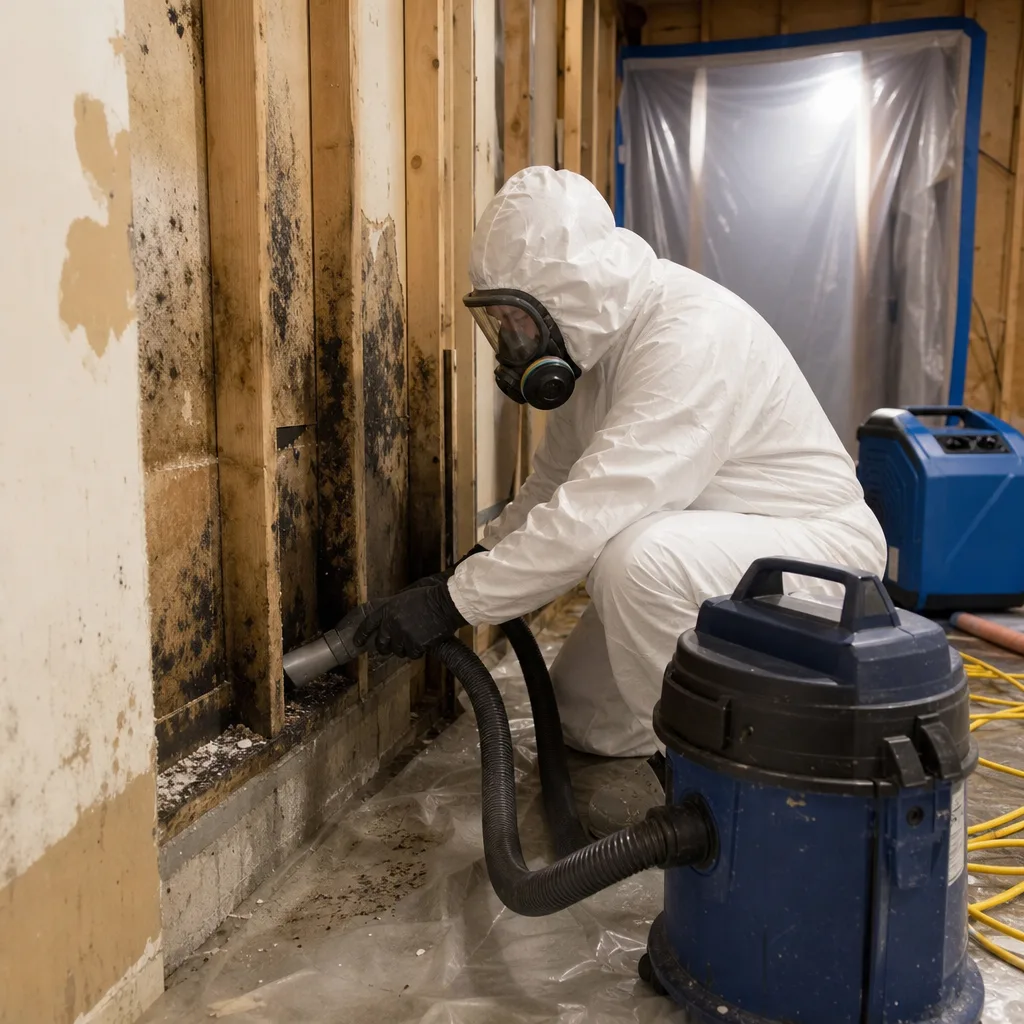
Mold Inspection & Testing
Our SeaTac inspections start with moisture mapping, not guesswork. We use thermal imaging and calibrated moisture meters to find elevated readings behind walls, above ceilings, and in crawl spaces - the places where SeaTac’s persistent wet-season humidity hides colonization. For homes in the airport noise-impact zone, we specifically probe wall cavities that received Port of Seattle insulation retrofits, since the added vapor barrier can mask moisture behind new drywall. Air sampling follows IICRC protocols, with lab turnaround in 48 hours. The written scope you receive names the affected square footage, the material classification of each surface, and the line-item price to remediate.
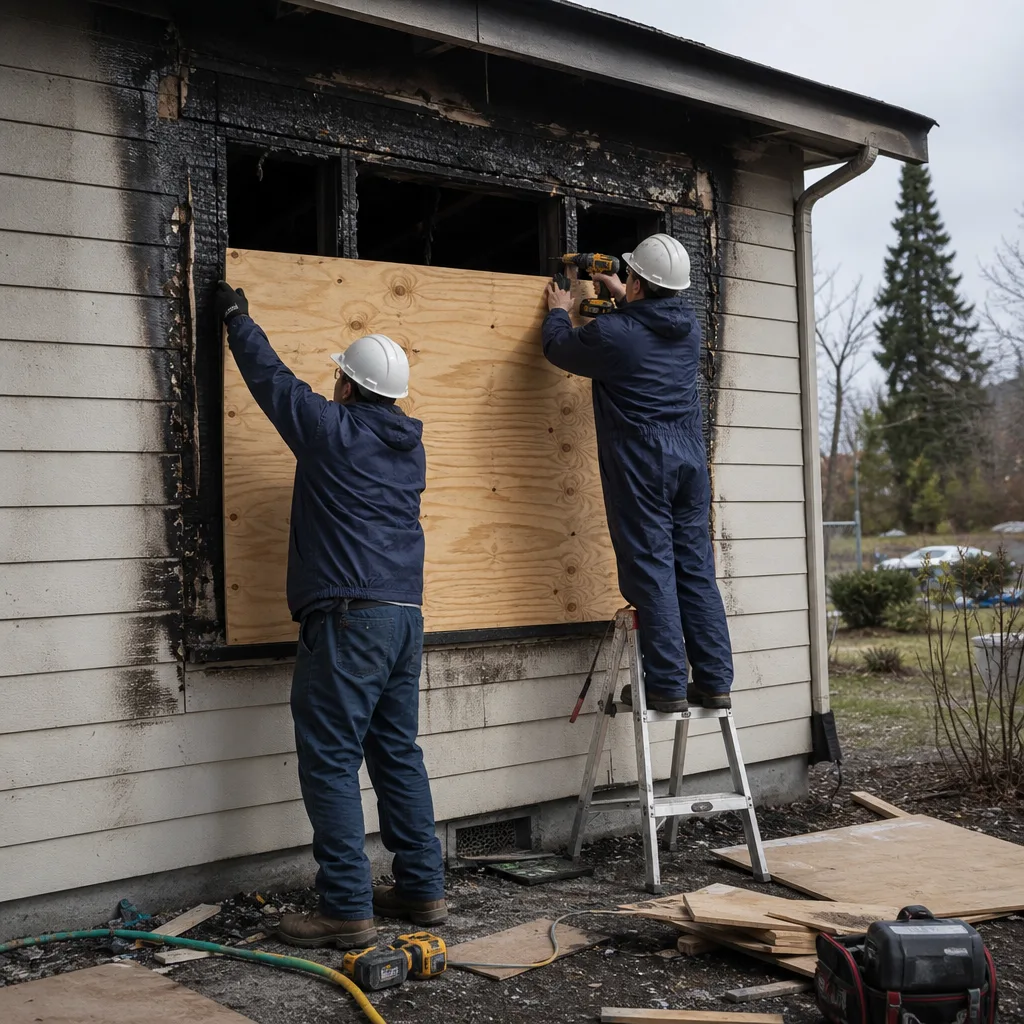
Mold Removal
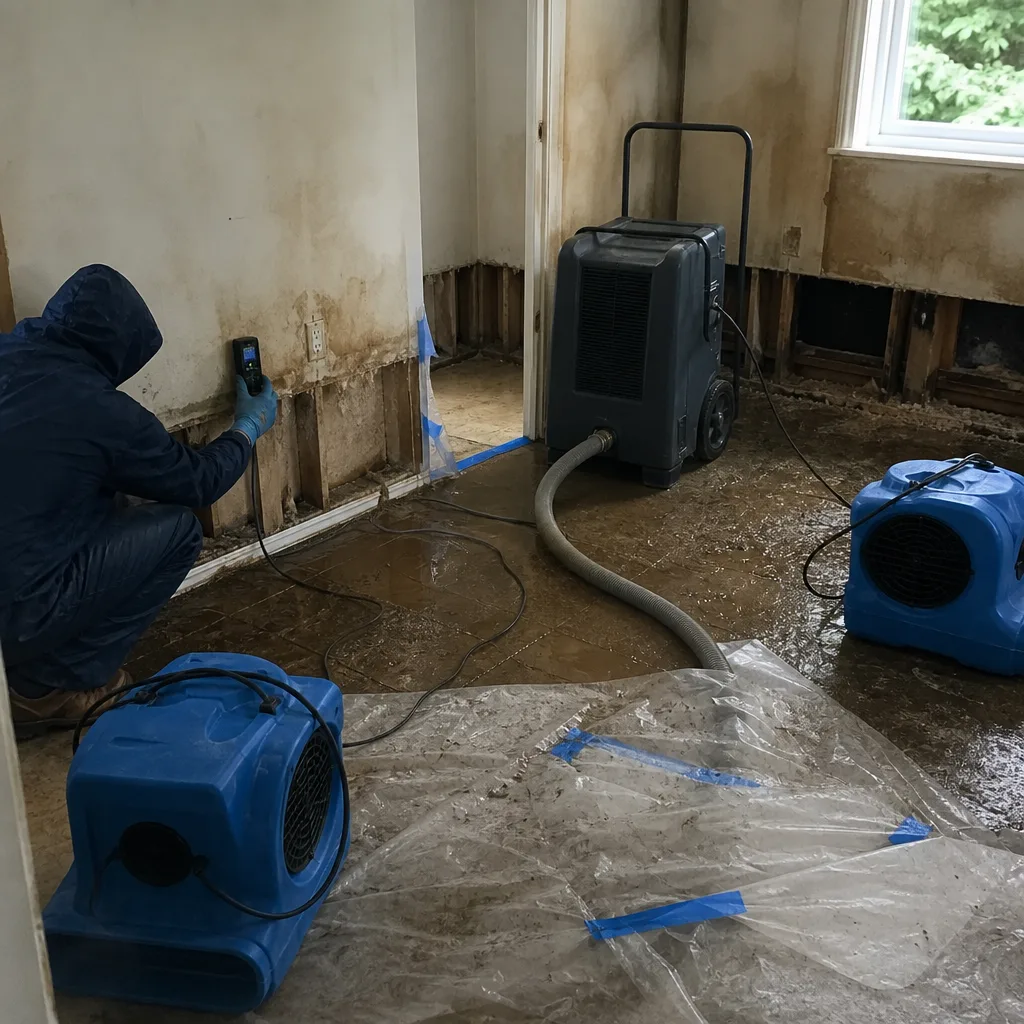
Removal in SeaTac means containment first. We seal the work zone with 6-mil poly sheeting and establish negative air pressure with HEPA-filtered scrubbers before any material is disturbed. For the dense townhome clusters and motel properties near the airport, this step is non-negotiable - shared walls and corridor ventilation can carry spores across units in minutes. Our crews remove affected drywall, insulation, and structural materials per RIA guidelines, bag them in sealed containment, and treat remaining framing with antimicrobial agents. Every cut, every bag, every reading is photographed and logged.
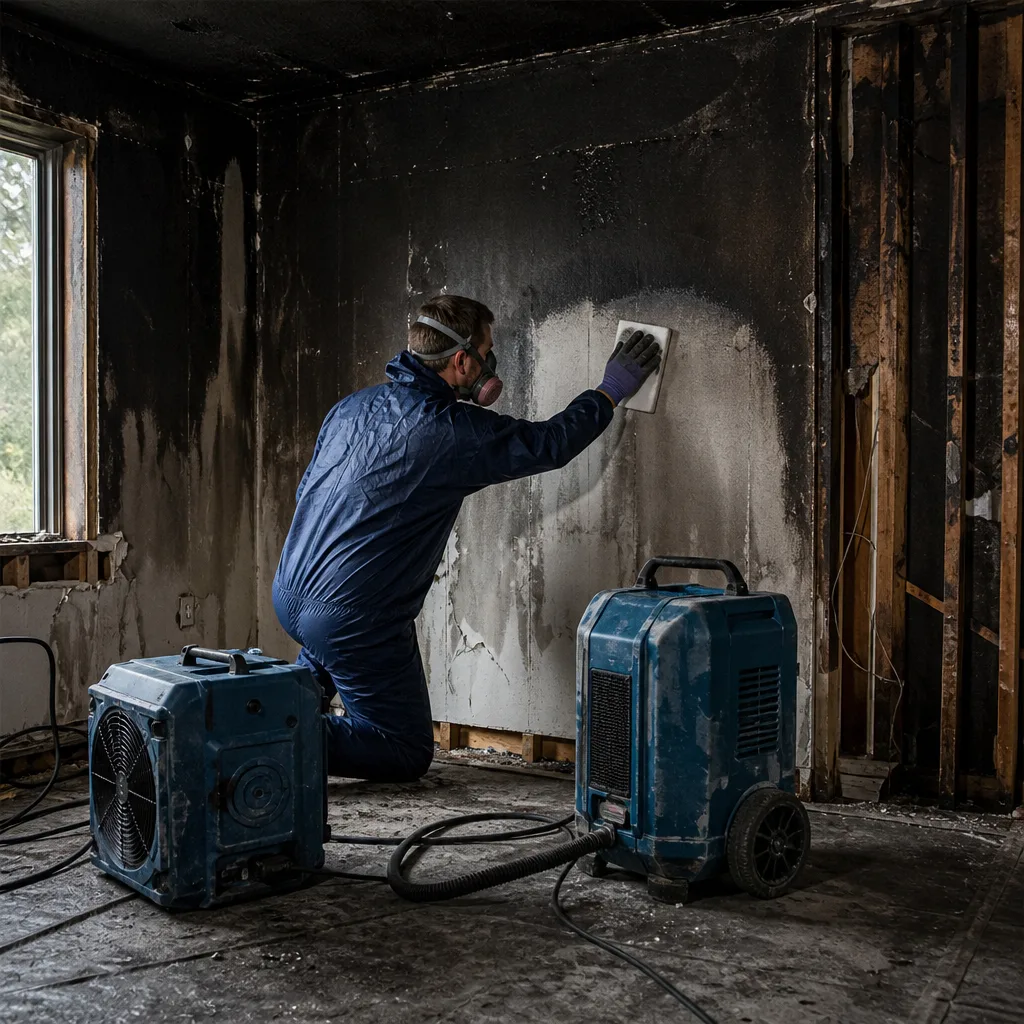
Black Mold Remediation
Stachybotrys and other toxigenic species require the same containment rigor as any mold, plus specific antimicrobial protocols and extended air scrubbing. In SeaTac’s older motel stock along International Boulevard, we’ve found black mold thriving in bathroom wall cavities where decades of guest-use humidity met slow plumbing leaks. The remediation includes full removal of affected substrate, not surface cleaning, followed by third-party clearance testing before containment comes down. We don’t close jobs on visual inspection alone.
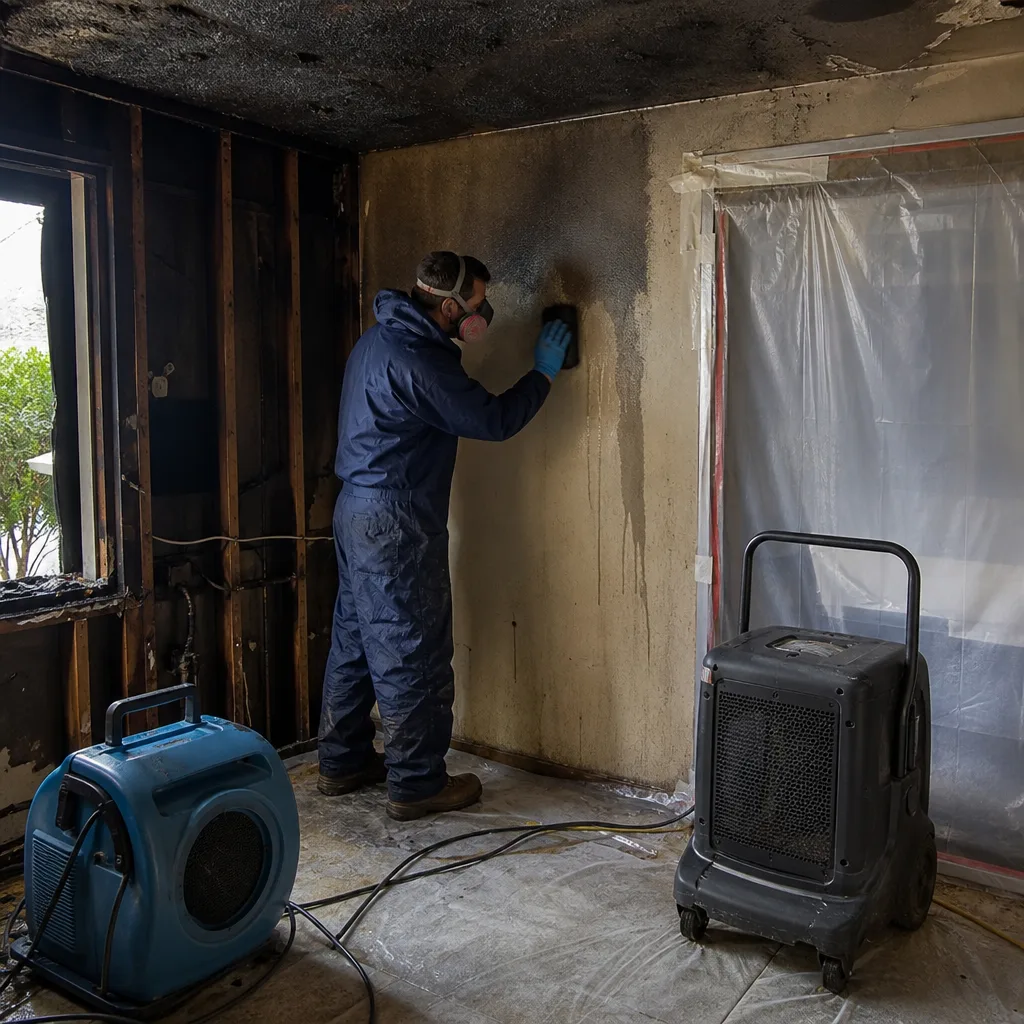
Air Quality Restoration
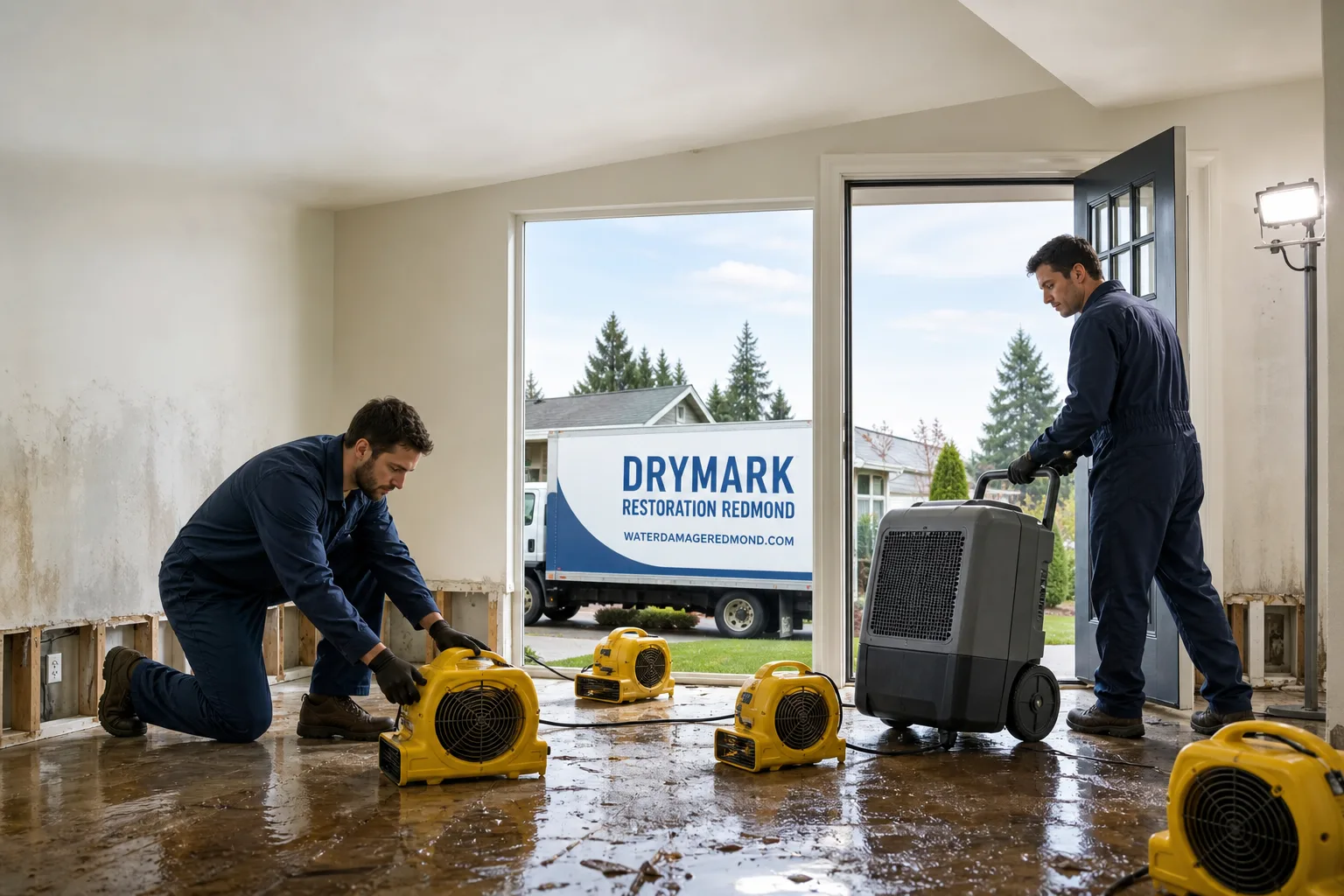
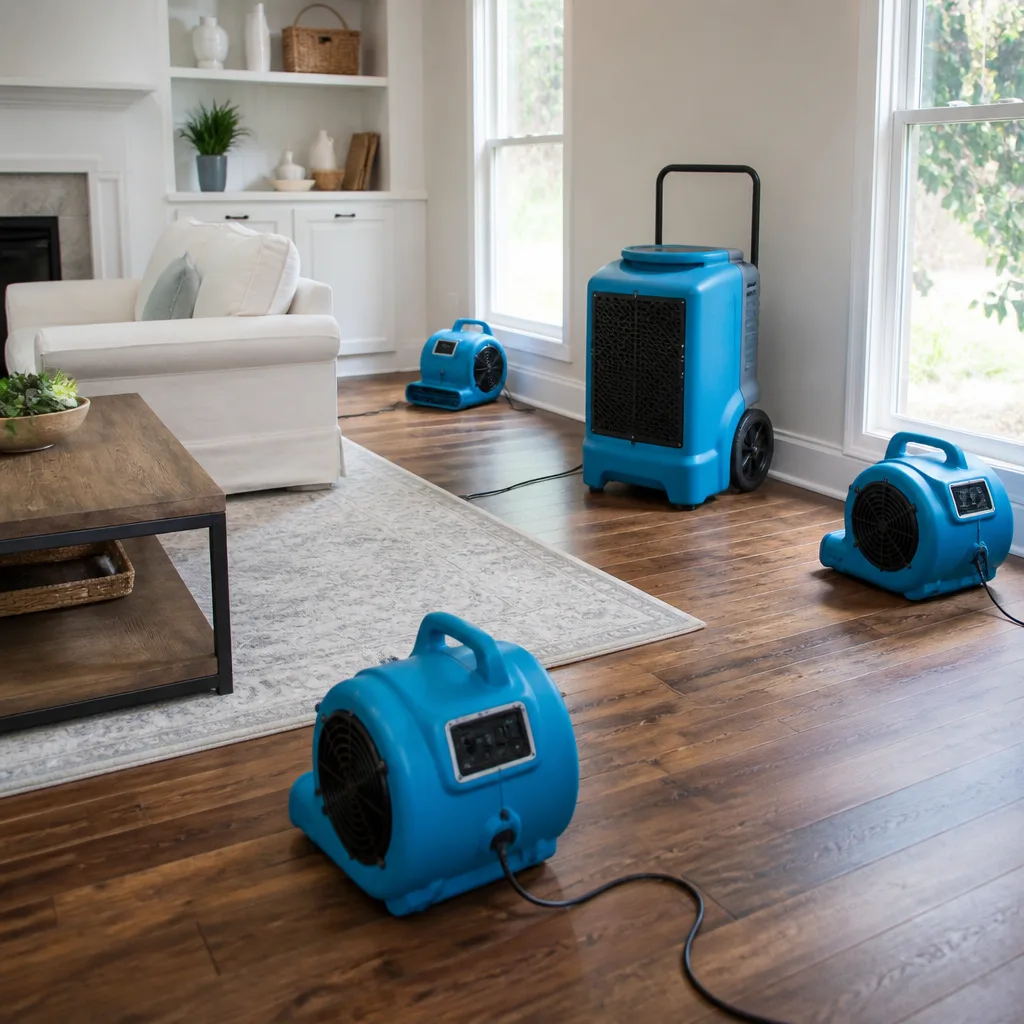
After physical removal, we restore breathable air through layered filtration and controlled drying. Our SeaTac deployments run Dri-Eaz and XPOWER equipment to establish vapor pressure differential - the measurable force that pulls moisture from materials into the air, where dehumidifiers capture it. For hotel properties, we coordinate with facilities managers to isolate HVAC zones and prevent recontamination. Post-remediation air sampling confirms spore counts at or below outdoor baseline before we sign off.
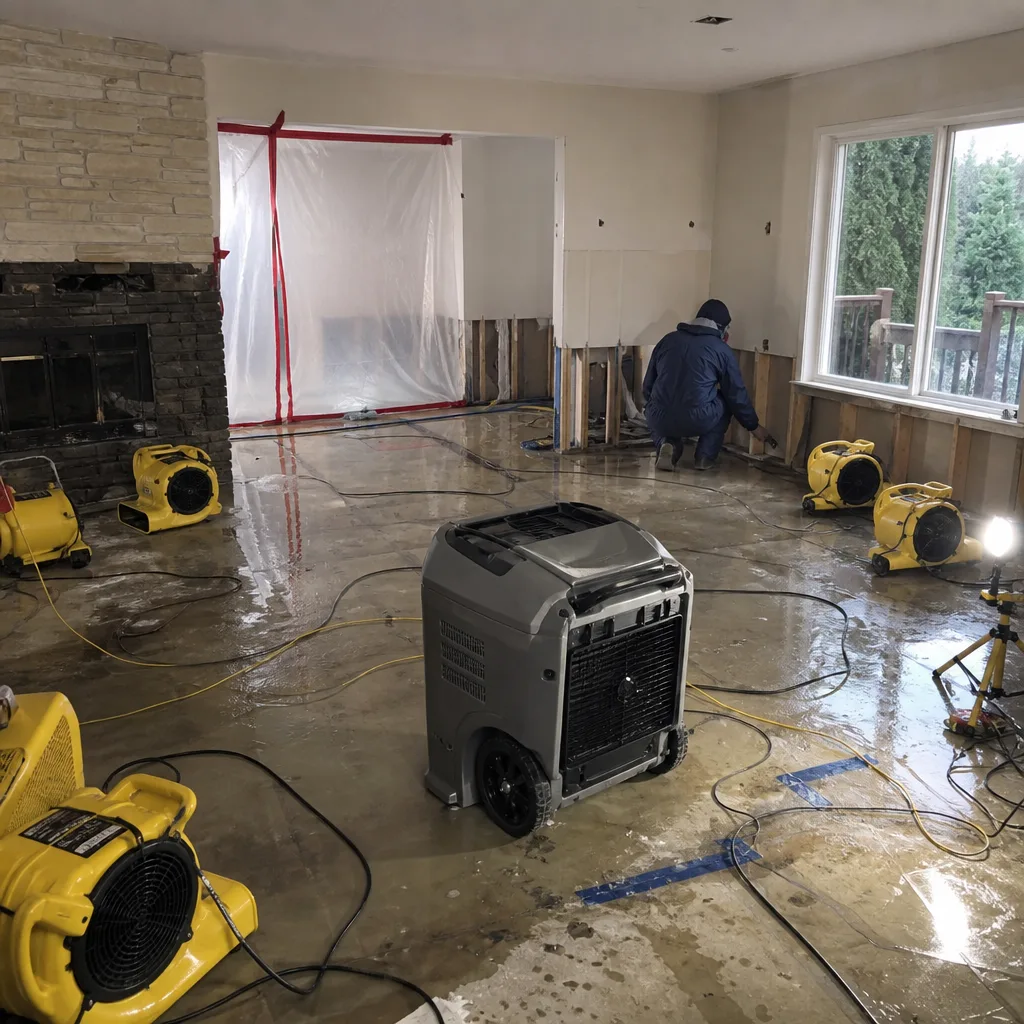
Crawl Space Treatment
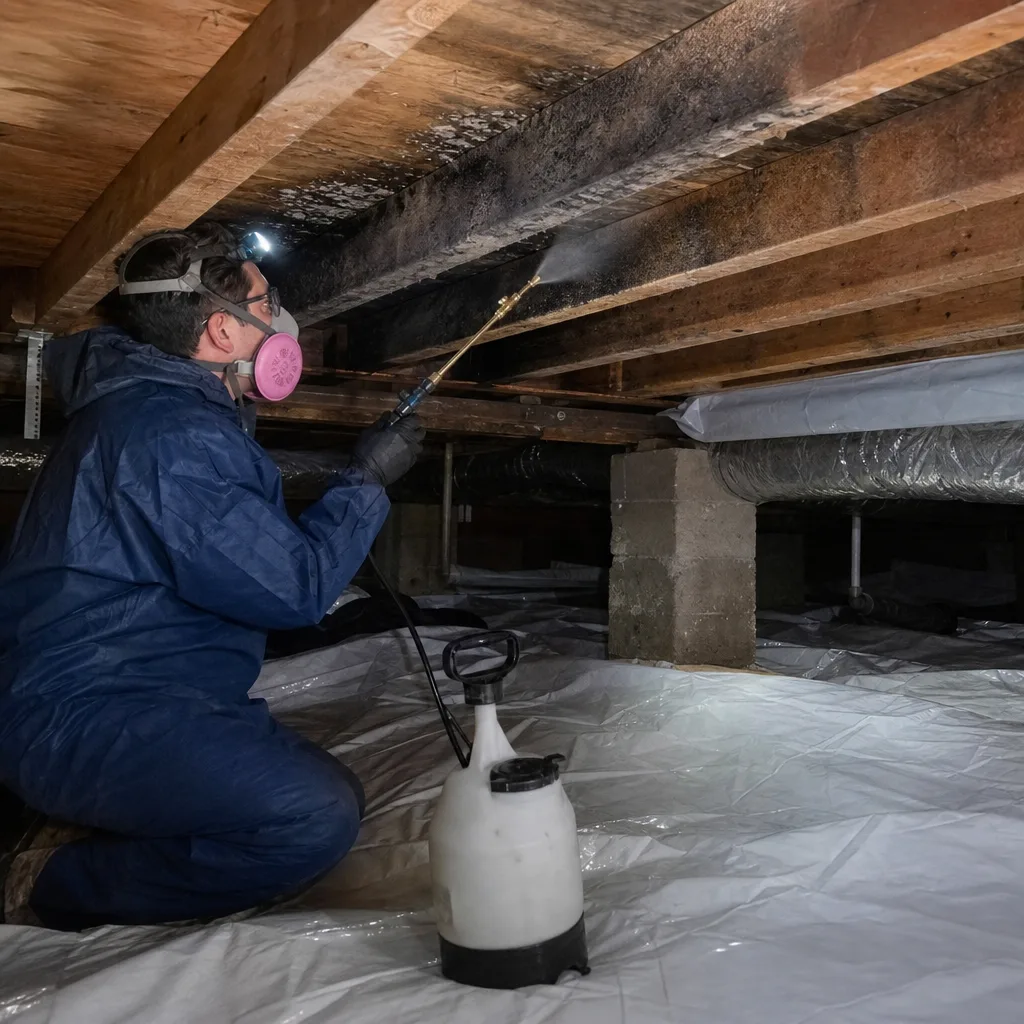
SeaTac’s post-WWII ranch homes, concentrated east of the airport near Angle Lake, sit on shallow crawl spaces with original perimeter drainage and minimal vapor barriers. After decades of Pacific Northwest rainfall, these spaces often hold relative humidity above 70% year-round - the threshold for active mold growth. Our crawl space treatment installs sealed vapor barriers, conditioned air supply or dedicated dehumidification, and sump systems where hydrostatic pressure demands it. We document before-and-after moisture readings at each structural contact point.
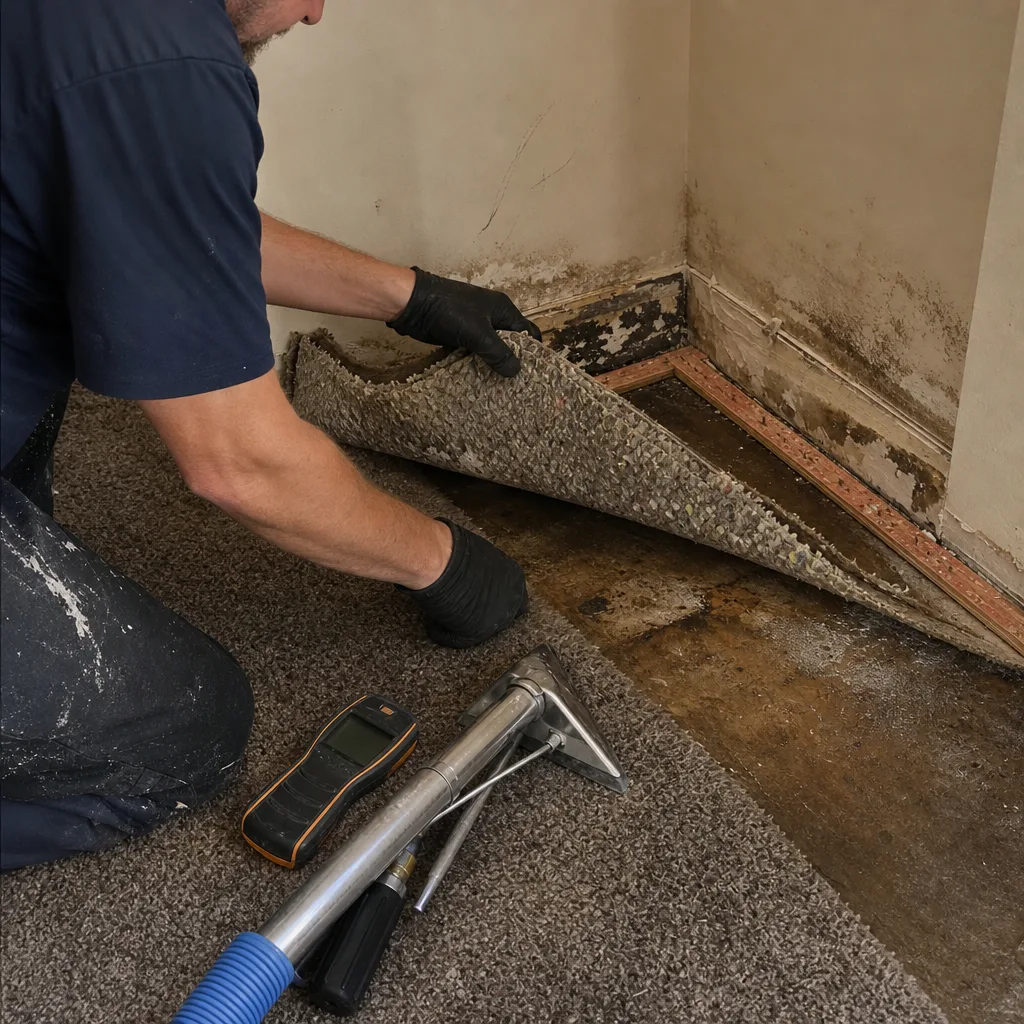
Moisture & Humidity Control
Controlling moisture in SeaTac means accounting for the NWS station’s recorded 38 inches of annual rainfall, compressed into a seven-month wet season that keeps exterior envelopes saturated. Our humidity control assessments evaluate gutter discharge, grade slope, crawl space ventilation, and the specific vapor management of any sound-insulation retrofit. We specify equipment by load calculation, not rule of thumb, and we size dehumidifiers to the cubic volume and air changes per hour the space requires.
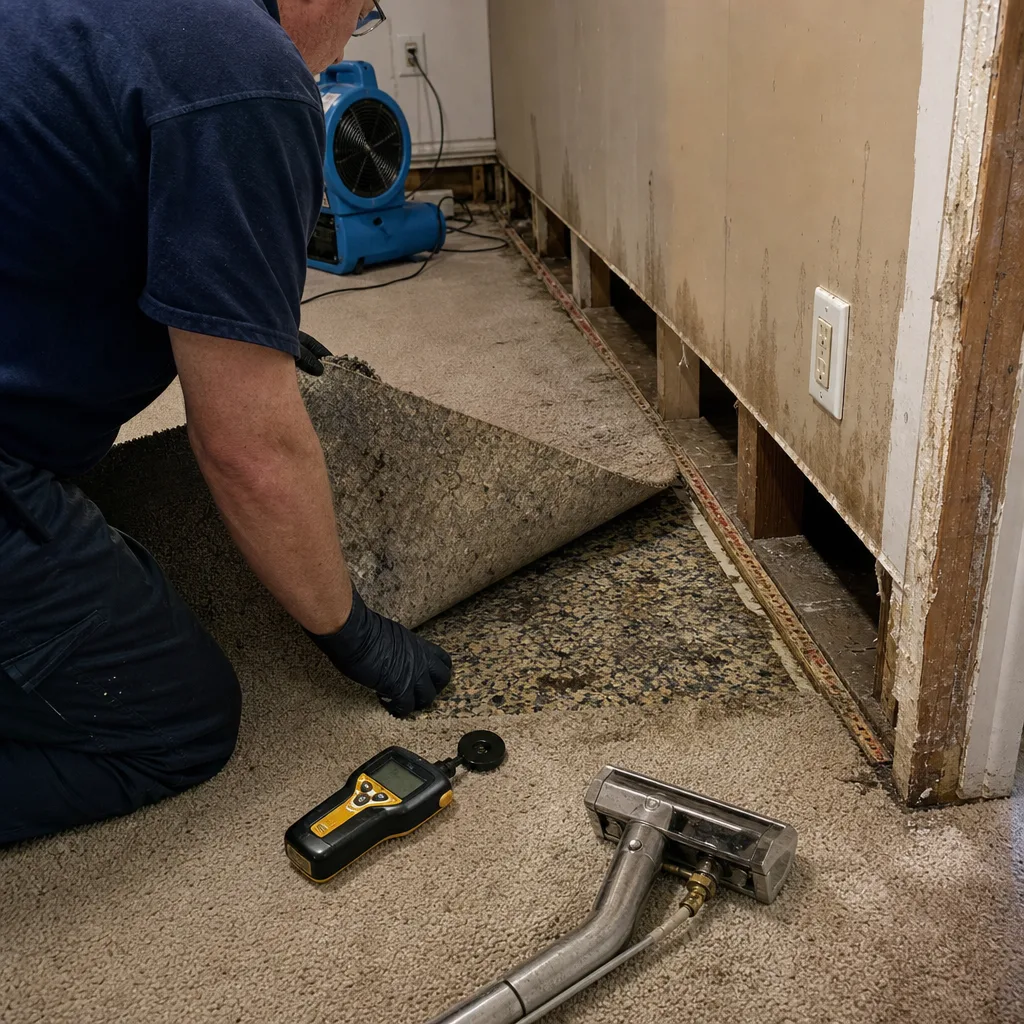
What happens when you call
- 1
A real person answersNo phone trees - you reach a local pro.
- 2
You get an upfront price rangeHonest numbers before anyone is dispatched.
- 3
A background-checked tech heads outLicensed & insured, dispatched right away.
- 4
You approve before work beginsNothing starts until you say go.
 Before
 After
AfterTrusted Brands We Service in SeaTac
Our SeaTac crews deploy professional-grade drying systems from Dri-Eaz, Phoenix, and B-Air, with Injectidry cavity-drying systems for the tight wall assemblies common in sound-insulation retrofitted homes. We stock HEPA filtration media, antimicrobial agents, and containment supplies locally, so SeaTac jobs don’t wait on freight. Every piece of equipment is documented to IICRC and RIA standards, and every deployment produces the daily psychrometric data - temperature, relative humidity, and specific humidity readings - that insurers expect to see on a payable claim.
Common Mold Remediation Problems We See in SeaTac Homes
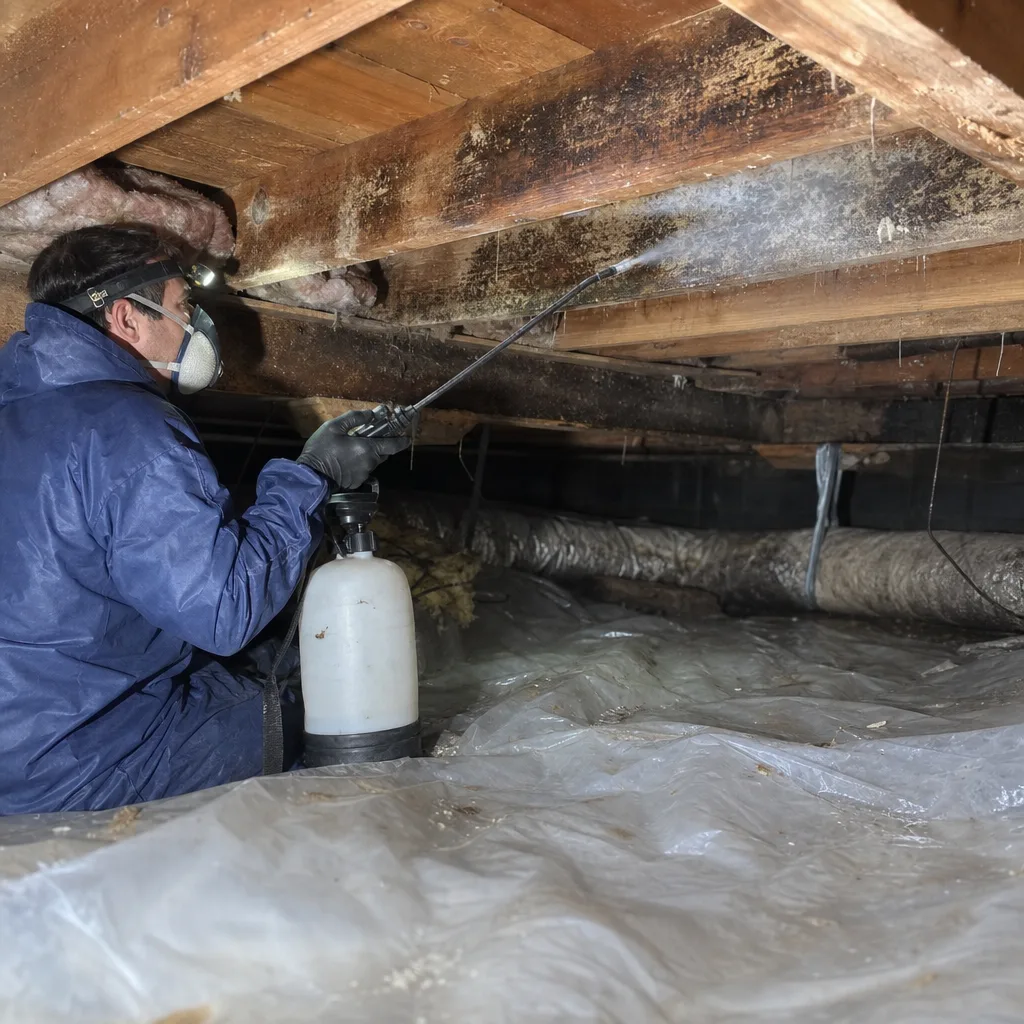
- Sound-insulation retrofit walls that look clean but hide active mold. The Port of Seattle’s noise-abatement program added attic insulation and replacement windows to thousands of SeaTac homes, but improper vapor management shifted the dew point into wall cavities. Moisture condenses behind new drywall where no one thinks to look.
- Crawl spaces under 1950s-1970s ranch homes with original plumbing and no vapor barrier. Shallow clearances, cast-iron drains, and decades of groundwater wicking create perfect conditions for wood-destroying fungi. We find these only when homeowners notice floor bounce or musty air rising through gaps.
- Hotel and motel water losses that become mold jobs within 48 hours. The aging plumbing risers in International Boulevard’s mid-century stock can’t handle modern occupancy rates. A single burst line on an upper floor saturates multiple units before night staff discovers it.
- Alley-load townhomes with delayed equipment staging. Tight parking and narrow access corridors mean drying equipment arrives hours slower than in suburban homes. Those hours matter: at SeaTac’s ambient humidity, mold colonization starts in 24-48 hours after water intrusion.
Pricing for Mold Remediation in SeaTac, WA
Here’s what mold remediation costs in SeaTac’s market, based on jobs we’ve scoped and completed under Haven Standard, Clause 1:
| Service | Typical Range in SeaTac |
|---|---|
| Mold inspection & testing | $350-$650 |
| Contained mold removal (single room, residential) | $1,200-$2,800 |
| Full remediation with air scrubbing (multi-room) | $2,800-$4,500 |
| Crawl space treatment with vapor barrier | $3,500-$7,000 |
| Hotel/motel unit remediation (per affected unit) | $1,800-$3,200 |
| Post-remediation air quality testing | $300-$500 |
What moves a job up or down within these ranges: affected square footage, whether containment must cross multiple rooms or units, the presence of HVAC contamination, and whether structural materials require removal versus surface treatment. Every SeaTac job gets a written price before work starts - no exceptions, no scope-creep additions once the crew is inside. Bring a competitor’s written estimate and we’ll review it free under our Free Second Opinion policy. Call (425) 689-8468 for your exact quote.
We Also Serve Cities Near SeaTac
Our crews work throughout the metro core, including Mold Remediation for properties in Redmond, Kirkland, Kingsgate, and Bellevue. Each city gets the same documentation-first standard: written price, photo record, daily moisture logs, and the 365-Day Done Right Promise backed by The Haven Standard.
Serving SeaTac, WA - Our Local Coverage Area
We’re based in the SeaTac area and know this community well. Use the map below to see our service coverage - if you’re nearby, we can almost certainly help.
FAQs - Mold Remediation in SeaTac
The added insulation and tighter window assemblies shifted the dew point from the exterior sheathing into the wall cavity, where Pacific Northwest humidity now condenses against the back of new drywall. Moisture accumulates unseen until mold colonizes or air quality complaints surface. We probe these cavities with thermal imaging and moisture meters on every SeaTac inspection in the noise-impact zone.
At SeaTac’s ambient humidity baseline, visible mold colonization begins 24-48 hours after water intrusion. For the aging plumbing risers and high-occupancy rooms along International Boulevard, that window is often missed by night staff or delayed maintenance schedules. We answer emergency calls to these properties with 24/7 live dispatch and same-day containment setup.
The sound-insulation retrofits create a hidden failure mode that doesn’t appear in neighboring Burien or Tukwila homes outside the flight-path contour. Standard drying protocols that don’t account for the shifted dew point leave moisture behind new drywall, and mold returns after the job closes. Our remediation includes cavity-specific drying with Injectidry systems and vapor-management correction.
Yes. The shallow crawl spaces near Angle Lake and Des Moines Creek are a core part of our SeaTac work. We install sealed vapor barriers, graded drainage, and dedicated dehumidification sized to each space’s volume and air changes per hour. Every treatment is documented with before-and-after moisture readings at structural contact points.
Our crews stage equipment for alley-load configurations daily in SeaTac. We coordinate with property managers for loading dock access, reserve parking where needed, and carry portable containment and air scrubbing equipment through narrow corridors. The goal is zero delay between arrival and negative-air containment - because in these properties, delay equals cross-contamination.
We got a call from a homeowner near Angle Lake whose 1960s ranch had a Port of Seattle sound-insulation retrofit a decade ago. After a slow supply-line leak, our moisture mapping found elevated readings behind the new drywall - the added insulation had trapped Pacific Northwest humidity and pushed the condensation plane inward, feeding hidden mold growth. We set up containment, removed the affected drywall, applied antimicrobial treatment, and ran Dri-Eaz dehumidifiers and XPOWER air movers to dry the wall cavities, then restored the assembly with proper vapor management.
Written by Alicia Brennan, Owner at Back to Dry Restoration, serving SeaTac since 2011.